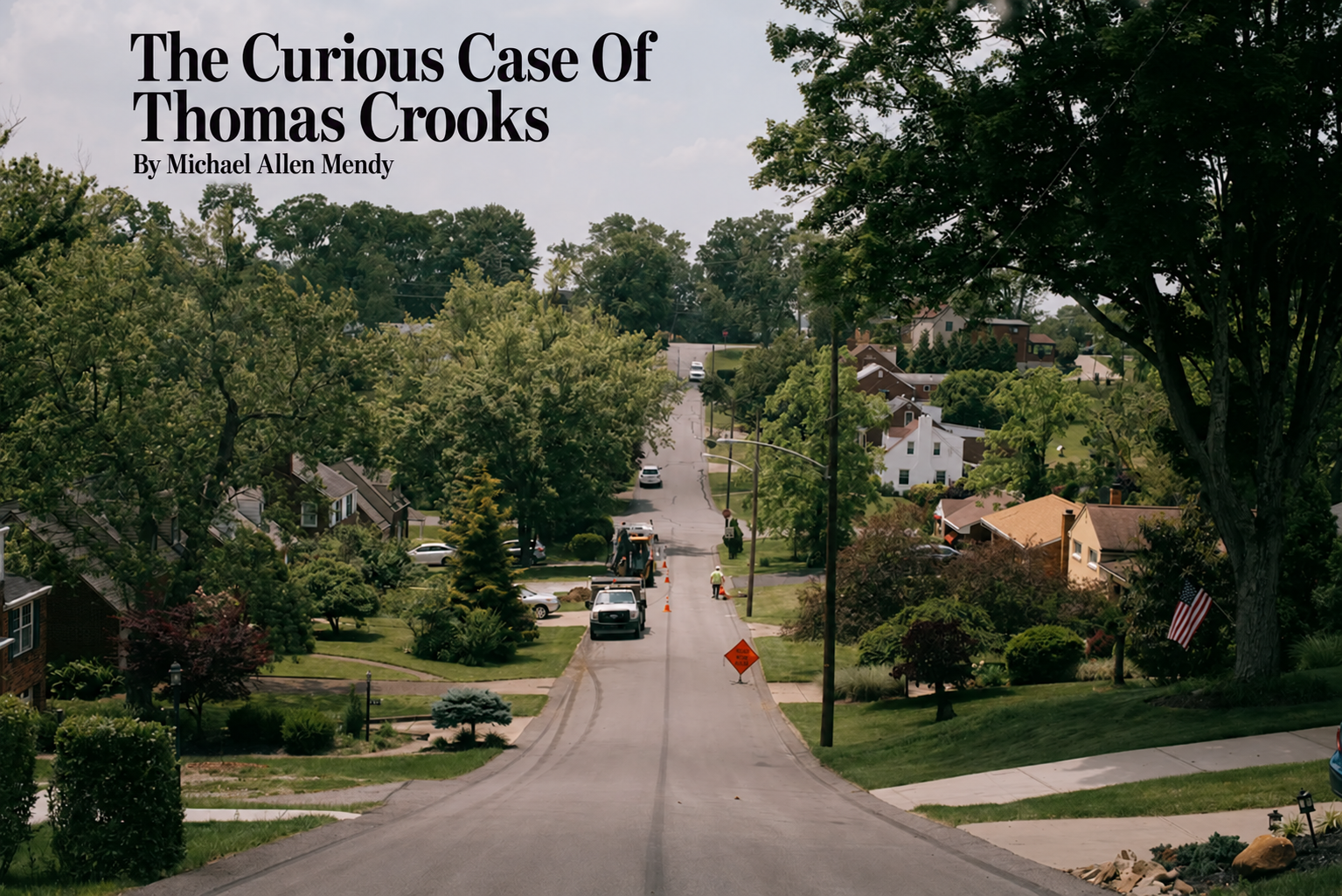
On the evening of July 13, 2024, a twenty year old from a quiet suburb south of Pittsburgh climbed onto the roof of a building at the Butler Farm Show grounds, laid down behind an HVAC unit with a rifle his own father had bought him, and fired eight rounds toward a stage where Donald Trump was speaking. One bullet clipped Trump's right ear. Another killed Corey Comperatore, a volunteer fire chief who had thrown himself over his wife and daughters to shield them. Two more men, David Dutch and James Copenhaver, were critically wounded. Less than a second after his eighth shot, a Secret Service counter sniper ended it with a single round to the shooter's head.
His name was Thomas Matthew Crooks, and more than a year of federal investigation, two congressional inquiries, an inspector general report, and thousands of pages of released records have not produced a motive anyone can point to with confidence. That absence is the strange part of this story. Most political violence in America comes with something attached to it, a manifesto, a grievance, a cause claimed after the fact. Crooks left almost nothing. What follows is what is actually known, drawn from the FBI's own findings, the House task force's final report, the DHS inspector general's review, and the reporting done in the aftermath, laid out as plainly as the record allows.
What Actually Happened That Day
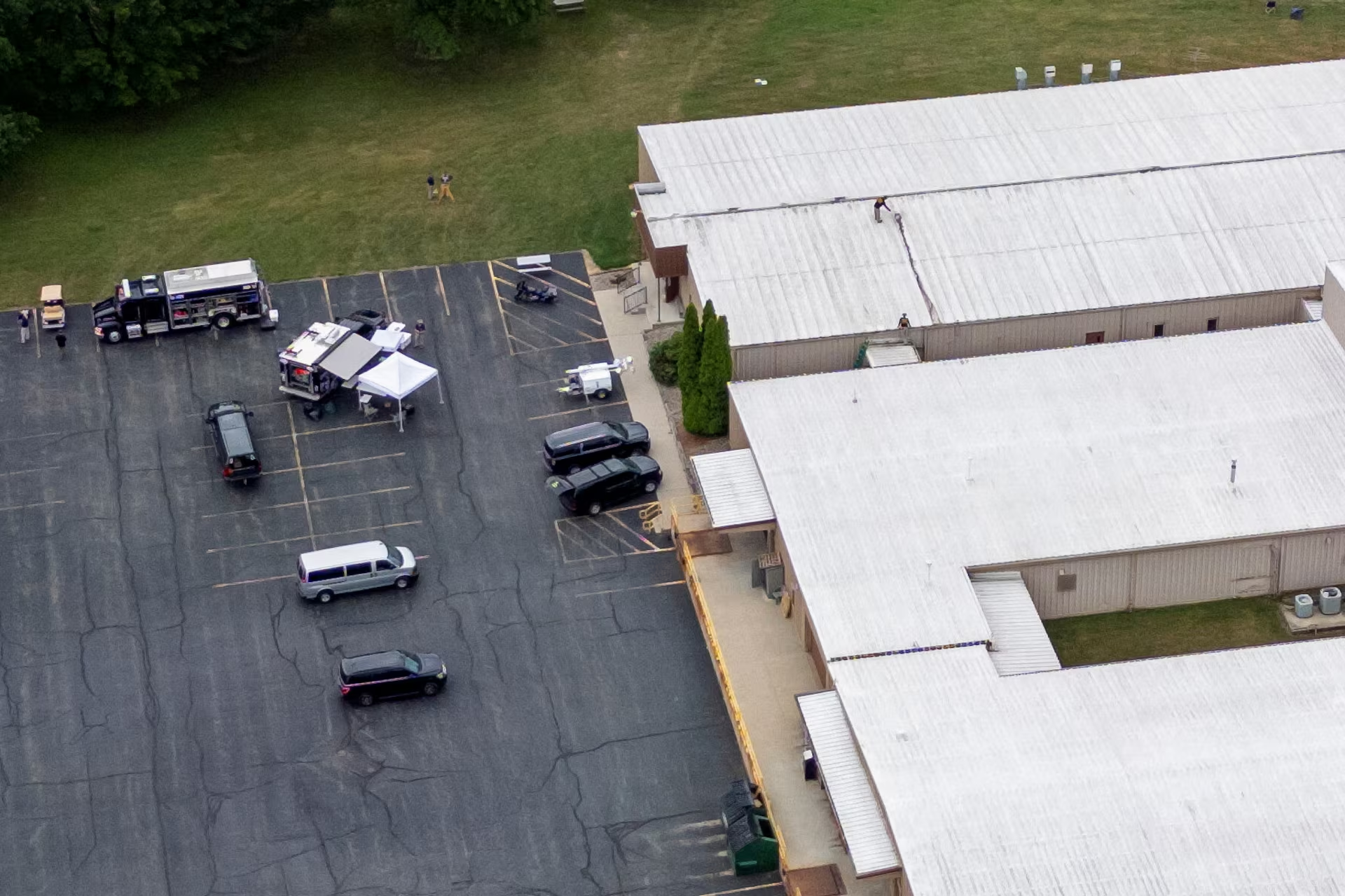
That's the AGR International building itself, photographed from above in the days after, the same low metal roof Crooks used and the same parking lot where investigators later set up shop to work the scene.
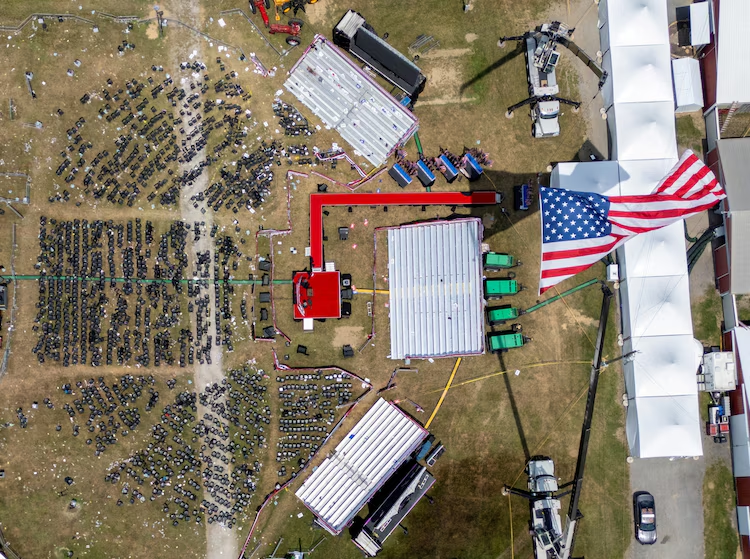
This is the rally grounds from directly above, taken before anything went wrong, the crowd already filling in around the stage and the flag hanging over the tent where Trump would speak.
Crooks did not decide that morning to do this. He had registered for the rally on July 6, the same day he searched his own computer for how far Lee Harvey Oswald had been standing from John F. Kennedy in Dallas in 1963. The next day, July 7, he drove out to the Butler Farm Show grounds and spent twenty minutes walking the property, four days after Trump's campaign had even announced the stop. On July 12, the day before the rally, he went to Clairton Sportsmen's Club and practiced with the rifle. Records later showed he had signed in at that range 43 times going back years, almost entirely on the rifle line rather than the pistol range.
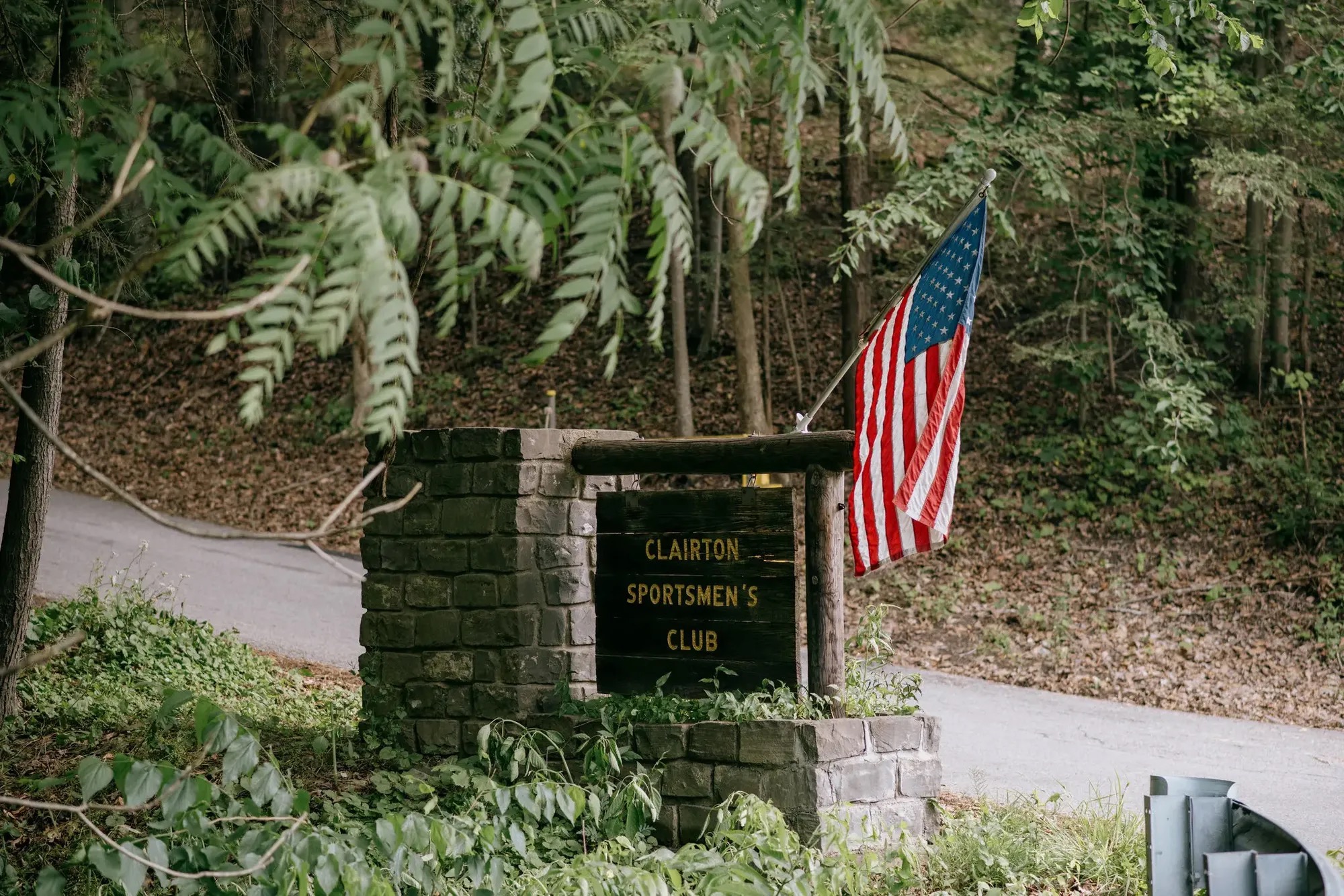
The club itself, tucked back in the woods south of Pittsburgh, a fairly ordinary members' range that Crooks had a long, documented relationship with well before anyone had a reason to look at his sign in log.
On the day itself, he arrived at the farm show grounds around 3:35 in the afternoon and flew a drone over the site for about eleven minutes, at one point passing roughly 200 yards from where Trump's podium would be. He bought fifty rounds of ammunition that afternoon in Bethel Park before heading to Butler. Local law enforcement noticed him well before anything happened. Officers on site texted each other that they'd seen a "kid learning around building we are in," naming it as AGR, and separately reported watching him with a golf rangefinder pointed toward the stage. Someone also flagged a bike with a backpack left sitting at the rear of the building, one that hadn't been there earlier. The FBI later concluded Crooks climbed onto the roof using ground equipment and a run of vertical piping on the building's side, carrying the rifle either hidden near the air conditioning unit or inside that backpack alongside the rangefinder.
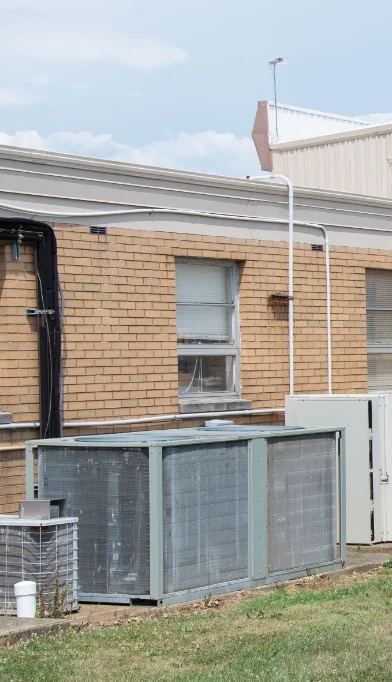
This is the actual unit, the same piping running up the brick wall next to it. It's a mundane piece of building equipment to be the center of a federal investigation, but it's the exact route the FBI says he used to get onto the roof unnoticed.
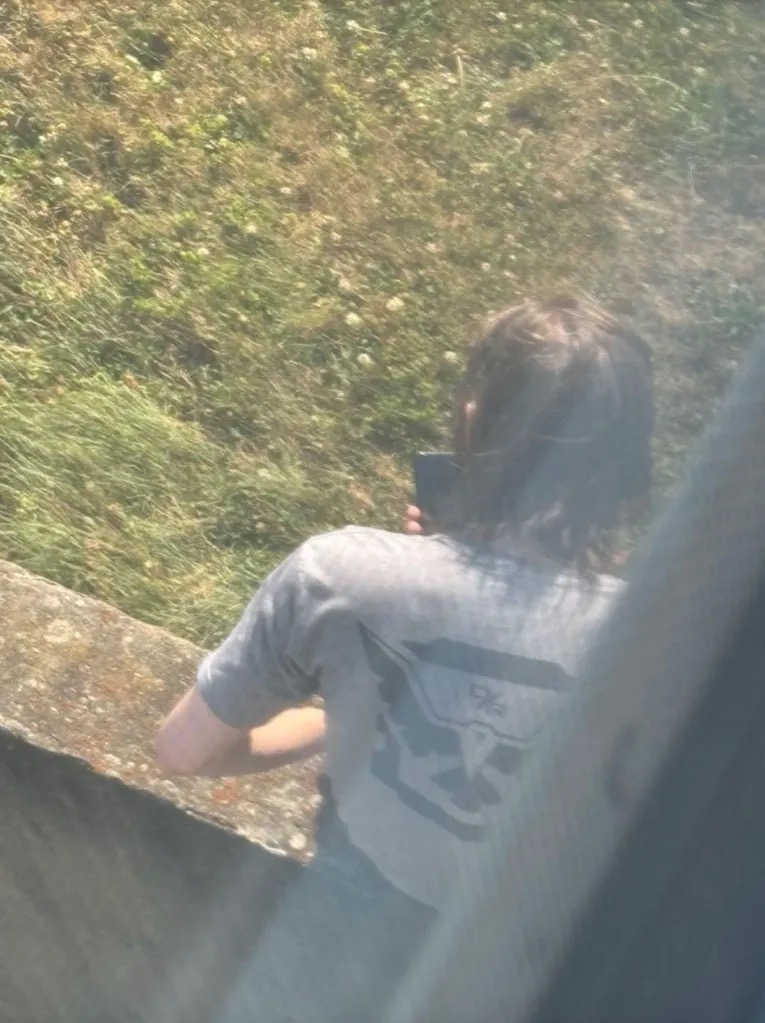
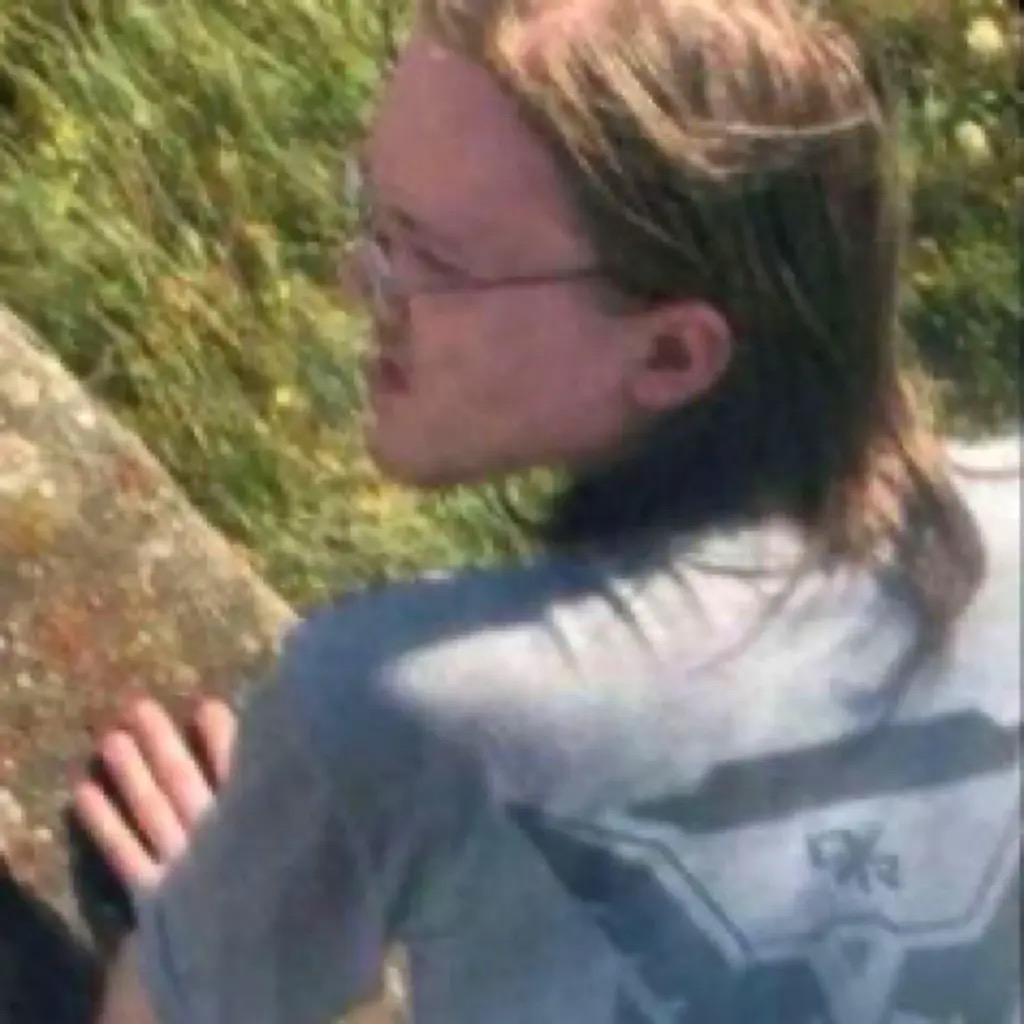
These are among the last photographs taken of him alive, shot from below by someone on the ground who noticed him up there before anyone in law enforcement did. He's on his phone in both, seemingly unbothered, minutes before any of this would matter to anyone else on the property.
Trump took the stage just after six. Within minutes, people in the crowd were pointing toward the AGR roof and yelling for police, having spotted Crooks themselves before officers moved. Two local officers went to the lowest point where the roof could be reached, and one boosted the other up high enough to get a hand on the edge.
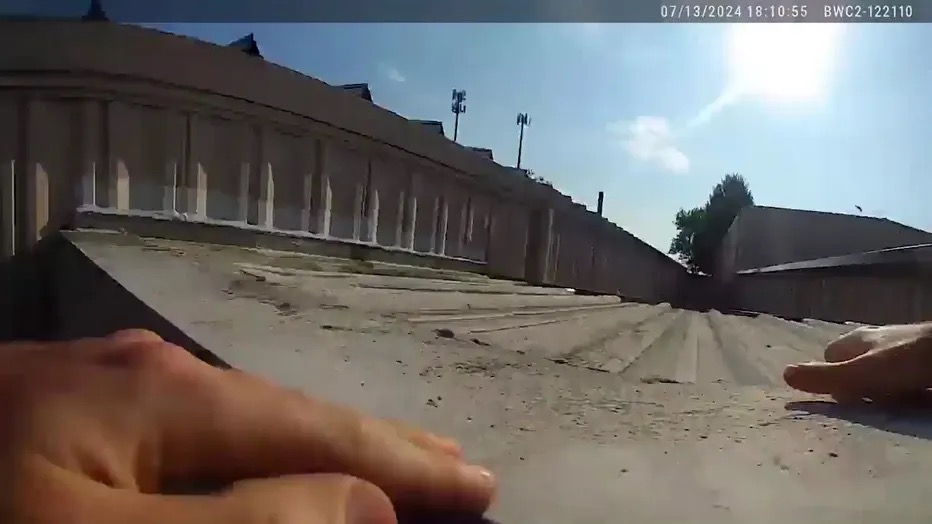
This is that officer's own body camera, timestamped 18:10:55, the exact instant of the climb, his hands braced on the roof edge as he pulls himself up to look. Seconds after this frame, Crooks turned and pointed the rifle straight at him. With no free hand to draw his own weapon and nothing to grab onto but the roof edge, the officer let go and dropped back down to the ground rather than get shot at that range. It's the closest anyone came to stopping this before it happened, and it came down to a single officer with both hands full.
Crooks opened fire on the stage seconds later, eight shots in roughly five seconds, from a DPMS Panther Arms AR-15 style rifle chambered in .223. A shot from Secret Service counter snipers on a nearby roof, likely a hit that only grazed him, is one theory for why he briefly flinched mid burst. Half a second after his last shot, a Secret Service SWAT operator fired the round that killed him.
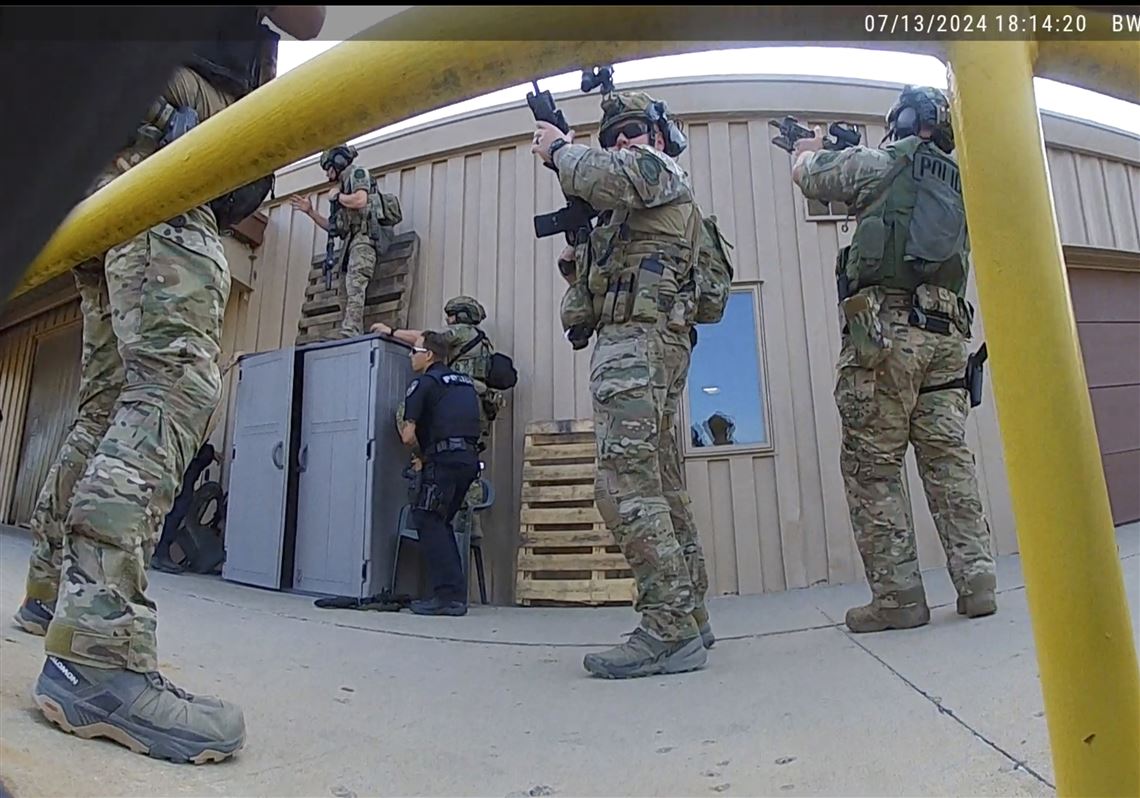
Four minutes later, at 18:14:20, this is what the scene looked like as a tactical team moved in around the same building to clear it and secure Crooks's body, a local officer standing off to the side while operators worked the perimeter with rifles up.
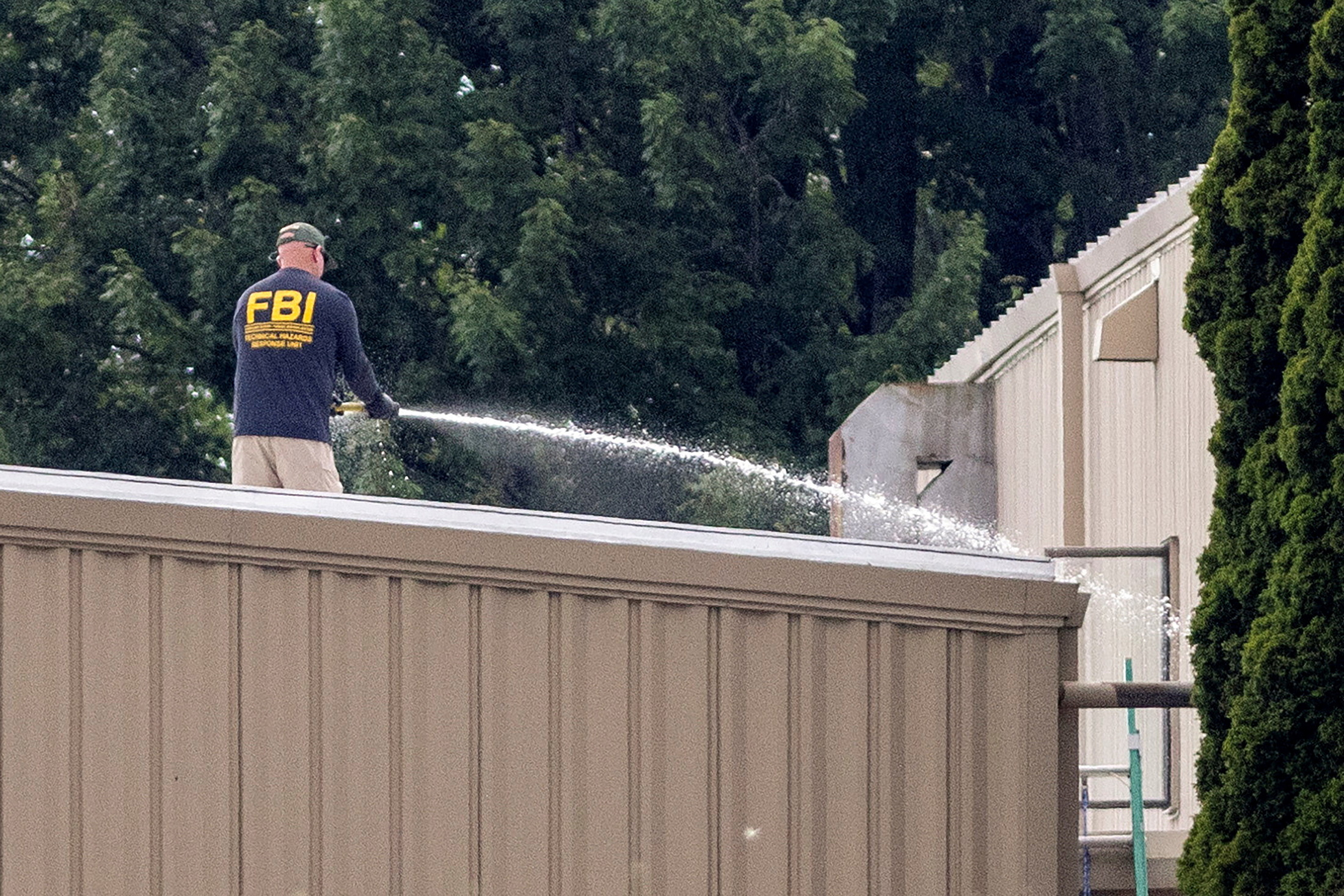
Days later, this was the same rooftop, an agent from the FBI's Technical Hazards Response Unit hosing it down as part of processing the scene, a strangely ordinary looking task for a spot that had just been the center of a national story.
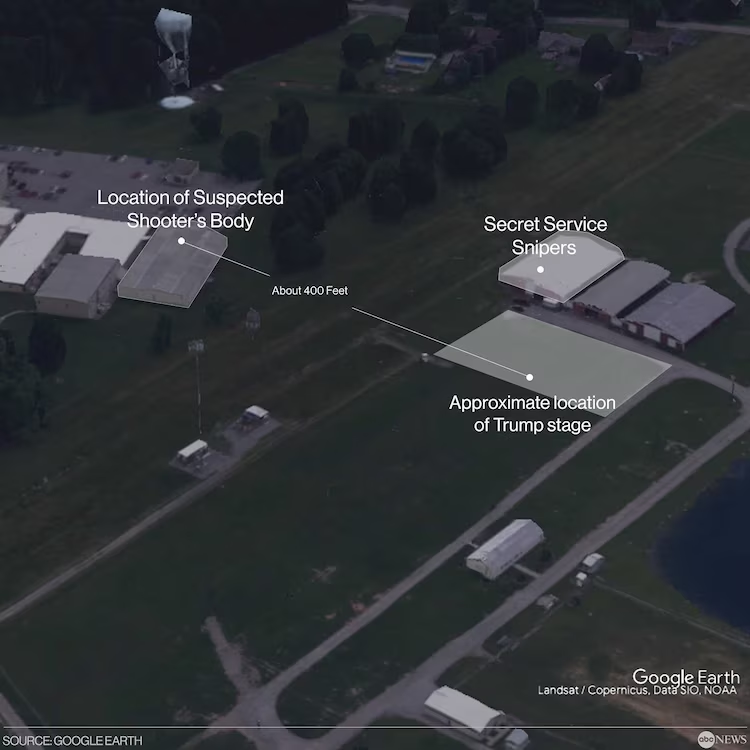
This diagram lays out the geometry that made the shot possible in the first place. About 400 feet separated Crooks's position on the AGR roof from the stage, with the Secret Service's own counter sniper team positioned on a different rooftop entirely, close enough to return fire but not close enough to have stopped the first shots from ever being fired.
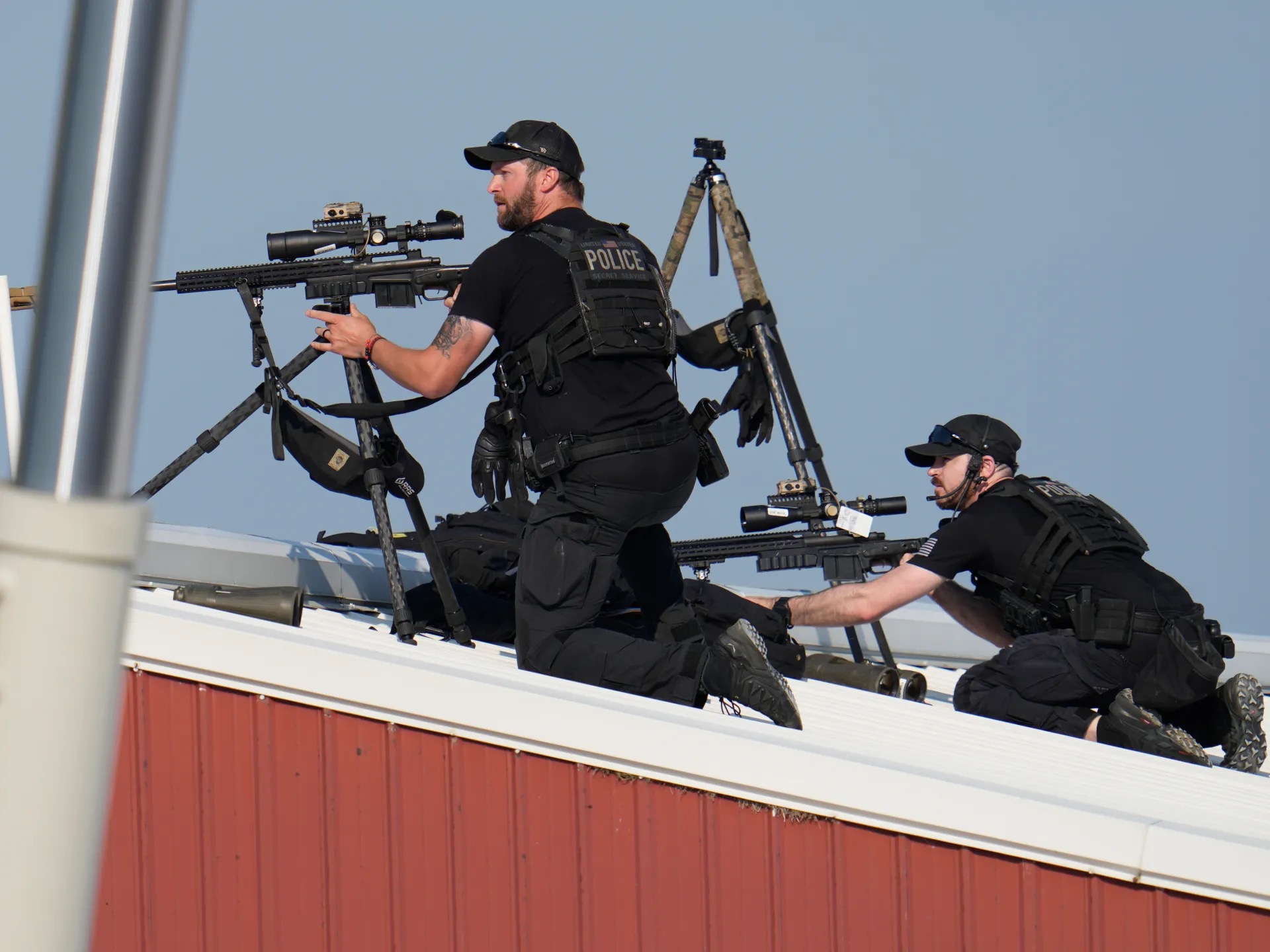
That's the counter sniper team itself, photographed on their own rooftop position that afternoon, rifles up on tripods well before anything went wrong. They were exactly where they were supposed to be, watching the crowd from the high ground the agency had assigned them. The building Crooks used simply wasn't on anyone's list of things to watch.
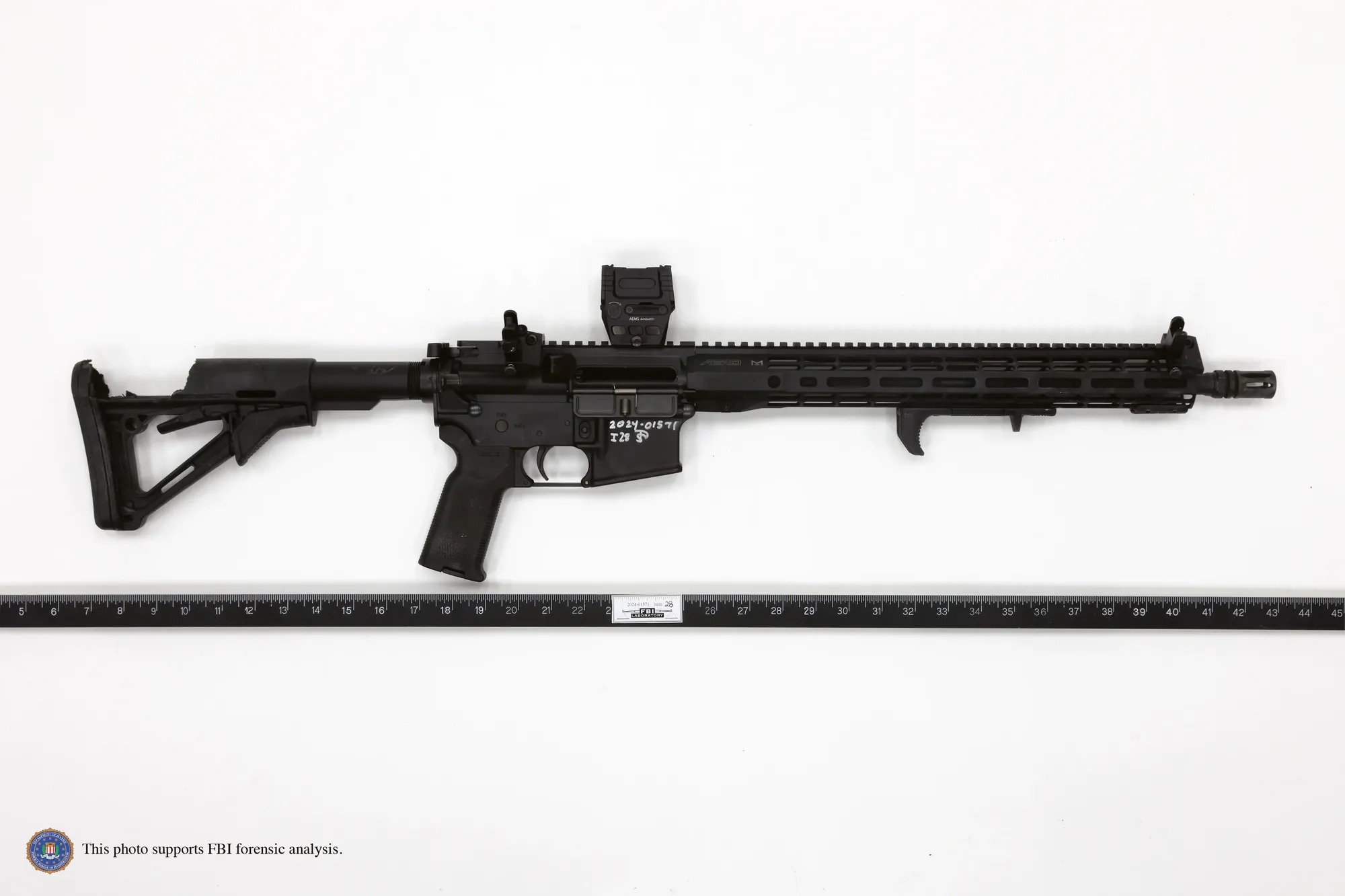
The rifle itself, laid out by the FBI lab with an evidence ruler underneath it. His father had bought it legally years earlier. The stock is broken, likely from the fall after the counter sniper's shot.
Trump grabbed his ear, dropped behind the podium as agents piled on top of him, and when they pulled him back up, blood visible on the side of his face, he raised a fist to the crowd before being walked off stage.
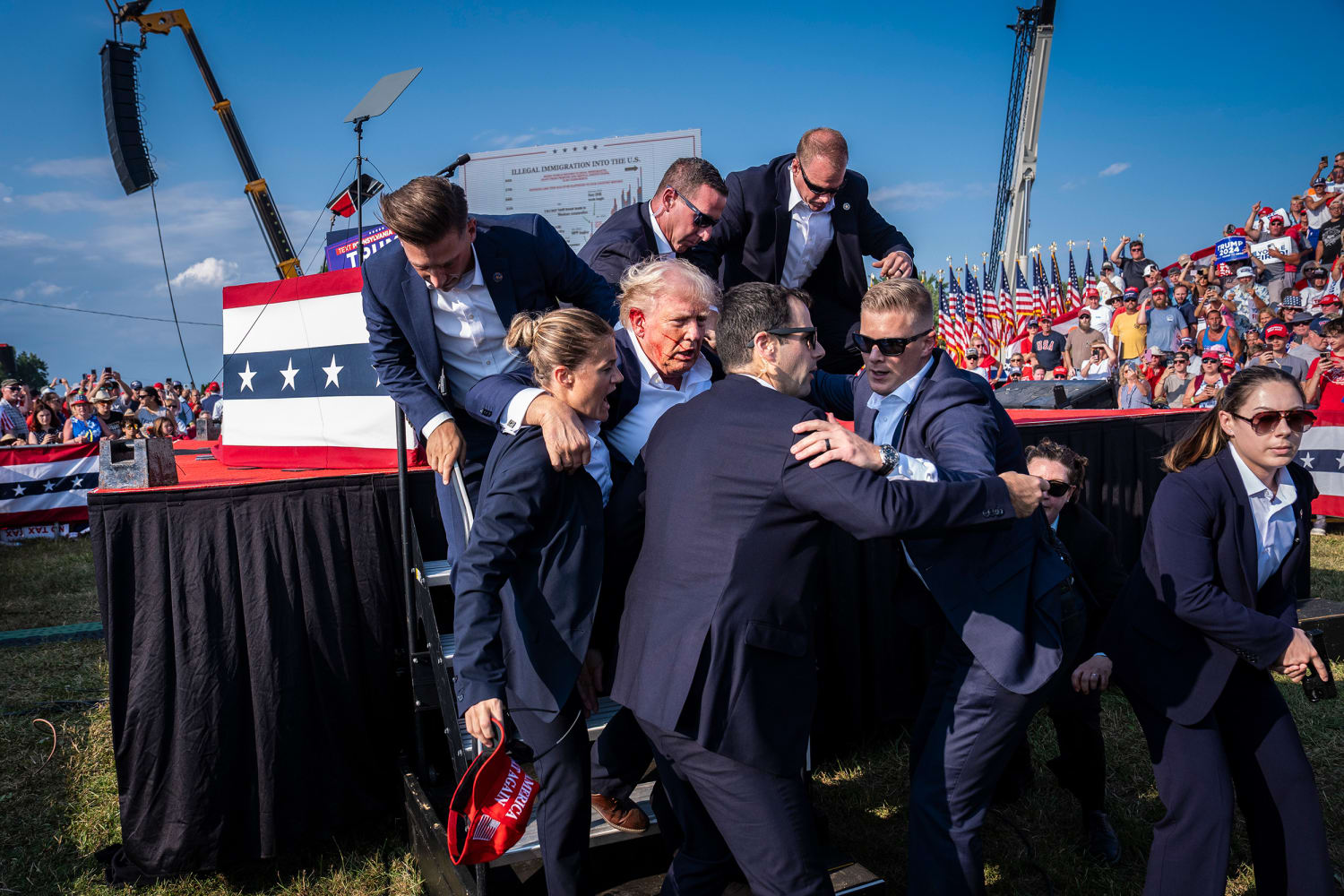
This is that moment, agents wrapped around him from every side as they got him down the steps and off the stage, the crowd and their flags still visible behind the scrum. The bullet or a fragment of it had struck the ear itself, ammunition that experts noted fragments easily after hitting something solid, which is consistent with the injury being caused by material that had already struck something else first. Comperatore was pronounced dead at the scene. Dutch and Copenhaver survived their wounds. Crooks's own autopsy later showed the fatal head wound plus retained fragments scattered in his neck and shoulder, consistent with more than one round having found him in that final half second.
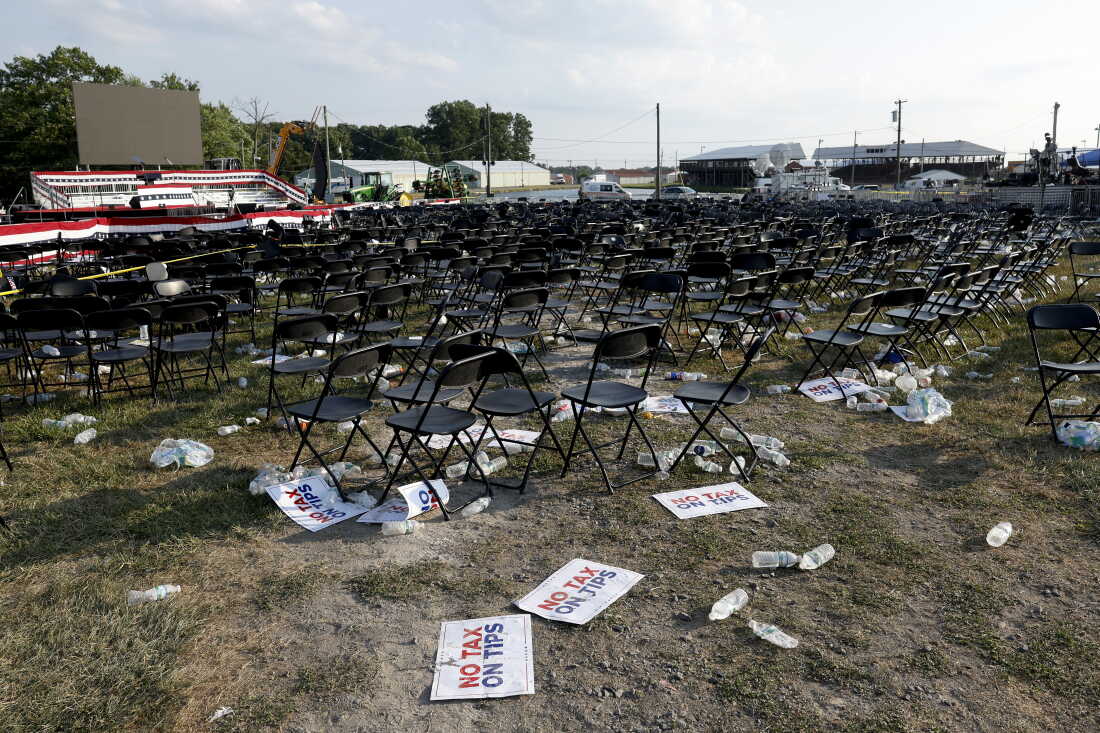
This is what was left behind once the grounds had emptied out, rows of folding chairs and dropped signs and water bottles where a crowd had been standing minutes earlier.
There was also a second, quieter part of the investigation that unfolded in the parking lot rather than on the roof. Crooks's car had been left near the venue, and inside the trunk investigators found two crude remote controlled explosive devices, a metal box wired to a receiver alongside a water bottle rigged the same way. A third device turned up later at his home. The FBI later said the receiver meant to trigger them had been left switched off and that the devices themselves had several construction problems, which is likely the only reason nobody else was hurt by them. A bomb squad rendered all three safe.
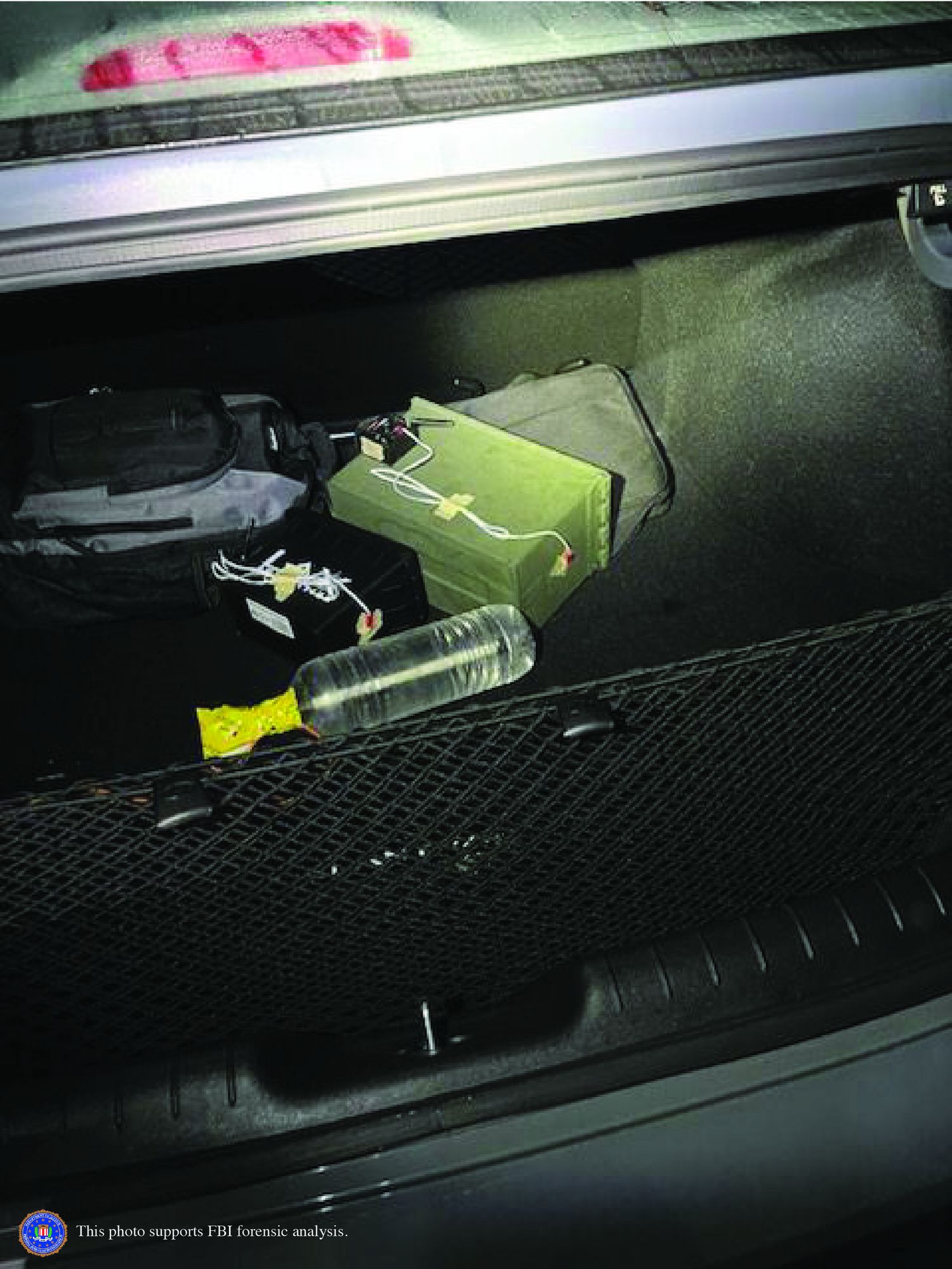
That's the trunk itself, photographed by the Allegheny County Police Department and later released by the FBI. Whatever these were meant to do, they never went off, and the transmitter that would have set them off was never turned on.
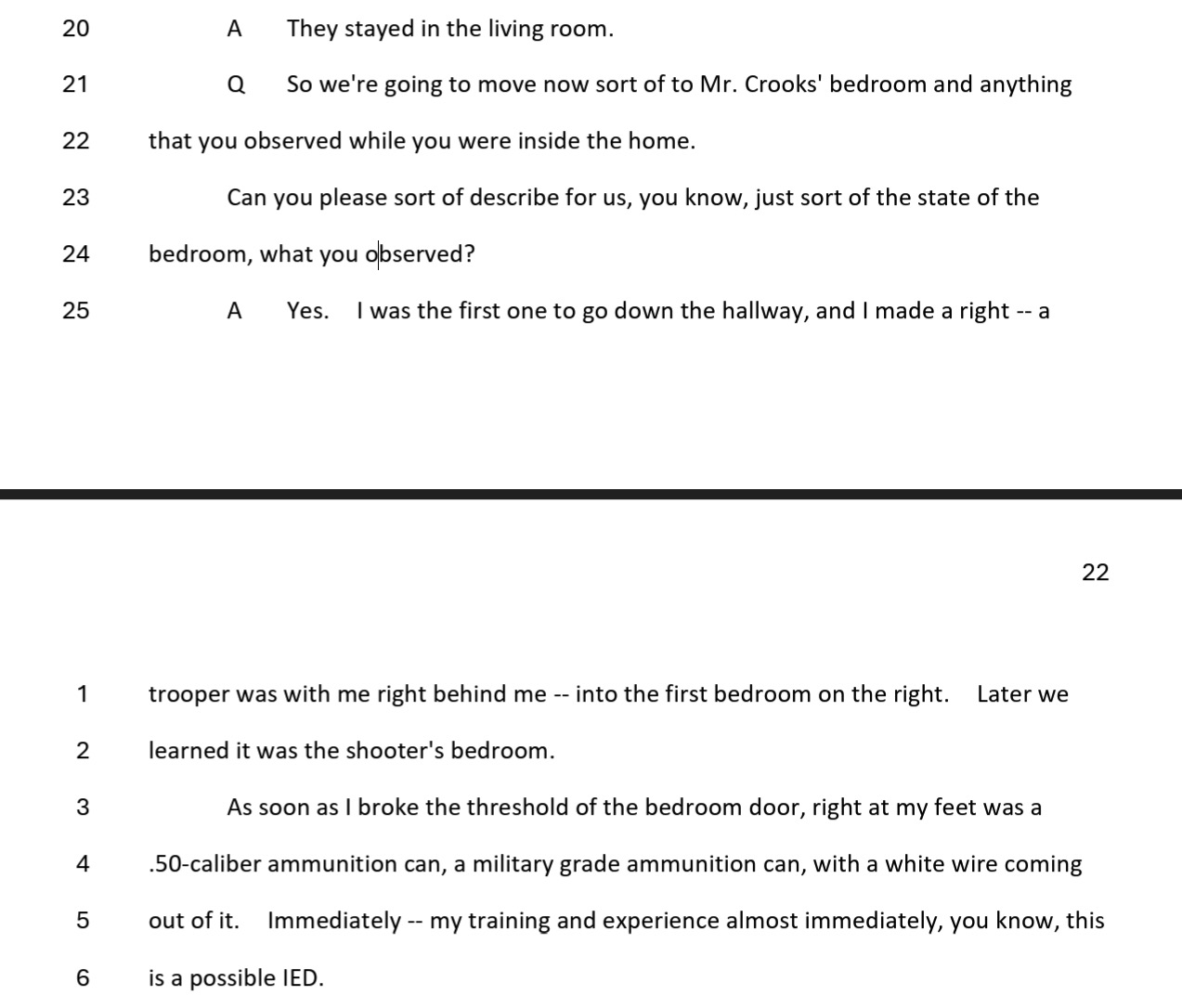
That's the third device described directly by the trooper who found it, testimony given to the task force afterward. He'd been first through the bedroom door and said that right at his feet sat a military grade .50 caliber ammunition can with a white wire running out of it, something his training told him almost immediately to treat as a possible IED before anyone even confirmed what it was.
That table rounds up what else came out of the house beyond the device itself. FBI Director Christopher Wray later confirmed the core of it directly to Congress: fourteen firearms recovered from the home, part of what he described as a family collection his father had built up, along with a second cellphone, a laptop, and a hard drive taken for investigators to go through. Wray's own testimony is the strongest sourcing for the firearms count specifically, stronger than the single news citation attached to a similar table that's circulated online, which points to an article actually about Crooks having researched the Oxford, Michigan school shooting rather than the home search itself. The underlying numbers check out against Wray's testimony even where that particular citation doesn't.
Who He Actually Was
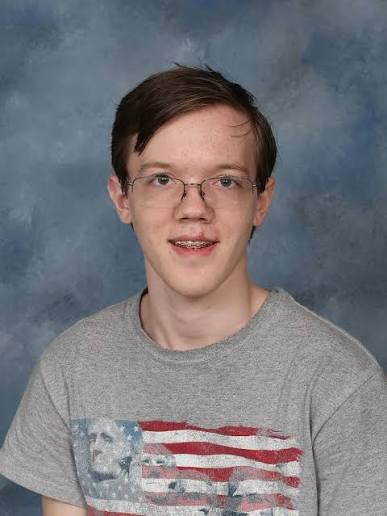
This is the school portrait that ran in nearly every early story about him, the one most people who followed the case still picture when his name comes up.
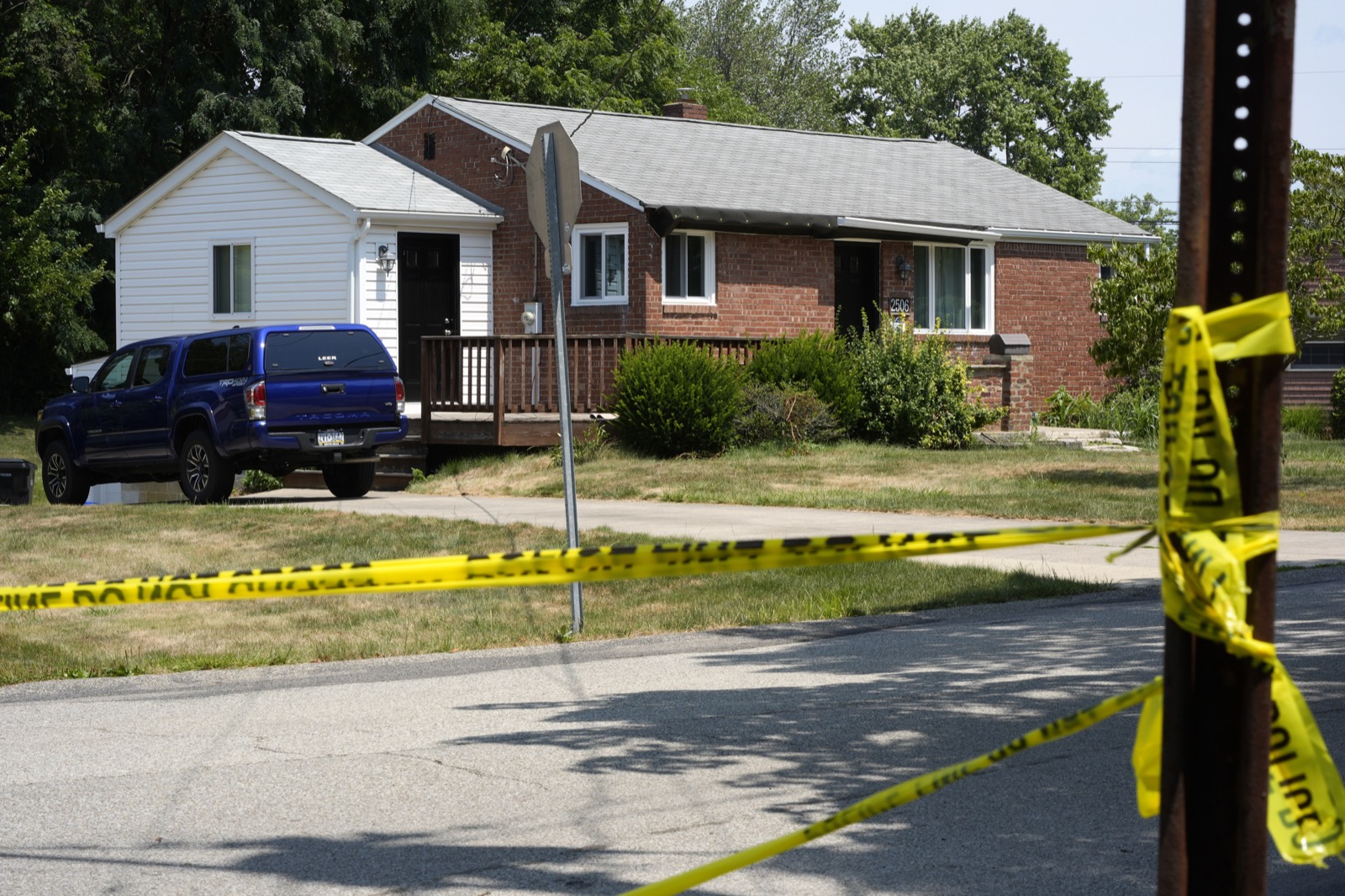
This is the house itself, taped off within hours of the shooting, the same driveway where a bomb squad would later clear that third device from his bedroom.
Crooks was born September 20, 2003, and grew up in Bethel Park with parents who both worked as licensed professional counselors, though both appear to have left the profession sometime in 2024. He graduated from Bethel Park High School in 2022 with high honors, a 1530 on the SAT, and perfect scores on three AP exams, earning a $500 award from the National Math and Science Initiative along the way. He was not the class valedictorian, despite that detail circulating early on. Classmates described him as quiet to the point of being nearly invisible, someone who was bullied over the years for his demeanor, his hygiene, and for showing up to school in camouflage hunting clothes. As a freshman he tried out for the school's varsity rifle team and did not make the cut. After graduating he enrolled at Community College of Allegheny County to study engineering science and worked part time as a dietary aide at a nursing home not far from home.
None of that reads as remarkable on its own, and that's roughly the problem investigators ran into. There is no diagnosed mental illness in his record that has been made public. There is no history of violence, no arrests, no restraining orders, nothing that would have put him on anyone's radar before July 13. The starkest description to come out of the FBI's interviews was from someone who knew him and described him as having been essentially emotionless since birth, a strange and unhelpful kind of detail to hang an explanation on.
CBS News later obtained a set of videos Crooks had recorded for a community college class in 2022, presentations where he sits or stands in his own living room and talks directly into a webcam.
This is one of them, Crooks standing in his family's living room delivering a class assignment on family holiday traditions. There's nothing in the content of it that would raise a flag on its own. What people who've watched it tend to notice is the delivery, flat, rehearsed, almost affectless, the same quality several people who knew him separately described when asked what he was like in person.
That clip is worth flagging precisely because of how much other material in this case is genuinely confirmed. The range logs, the drone flight, the ammunition purchase, the search history, all of that comes from records the FBI or congressional investigators actually obtained and cited. This particular video does not have that kind of sourcing behind it, and it should be read with that difference in mind rather than folded in with everything else.
The Motive Nobody Could Find
This is the part of the case that has frustrated investigators the most, and it's not for lack of trying. The FBI pulled his devices, his search history, his financial records, and interviewed people who knew him, and the conclusion the Bureau eventually delivered to Congress was that the evidence gave "valuable insight" into his mindset without ever adding up to a clear ideological or political motive. That's an unusual thing for the FBI to say plainly rather than dress up, and it's stayed true through every subsequent report.
The search history is the strangest piece of it. In the month before the shooting he ran more than sixty searches touching on both Trump and Biden, not one candidate exclusively. On the day he registered for the rally, he also looked up the exact distance between Oswald and Kennedy in 1963, a search that reads very differently in hindsight than it would have at the time. His politics, to the extent they can be reconstructed, don't sit neatly on either side. He was a registered Republican, having signed up a week after turning eighteen in 2021. But before that, at seventeen, he'd given fifteen dollars to the Progressive Turnout Project through ActBlue on January 20, 2021, the day of Biden's inauguration. The group later said the donation came in response to a mass email about tuning into the inauguration coverage and that the account was unsubscribed from their list years before the shooting, which suggests an impulse click rather than a considered political act either way. People who knew him described him as calling himself a Republican who disliked "woke" ideology but who also, according to a relative, did not buy into 2020 election fraud claims. Meanwhile, digital records reviewed by investigators reportedly showed his online comments drifting from pro-Trump toward anti-Trump over a period of years. None of the people investigators talked to described him as intensely political in daily life either way.
No manifesto turned up. No note. No social media trail laying out a grievance the way these things usually come packaged. The FBI has stated it found no credible evidence he conspired with anyone else, that he acted alone start to finish. One document that surfaced later, through a Freedom of Information Act request filed by Judicial Watch, complicates that picture slightly without overturning it.
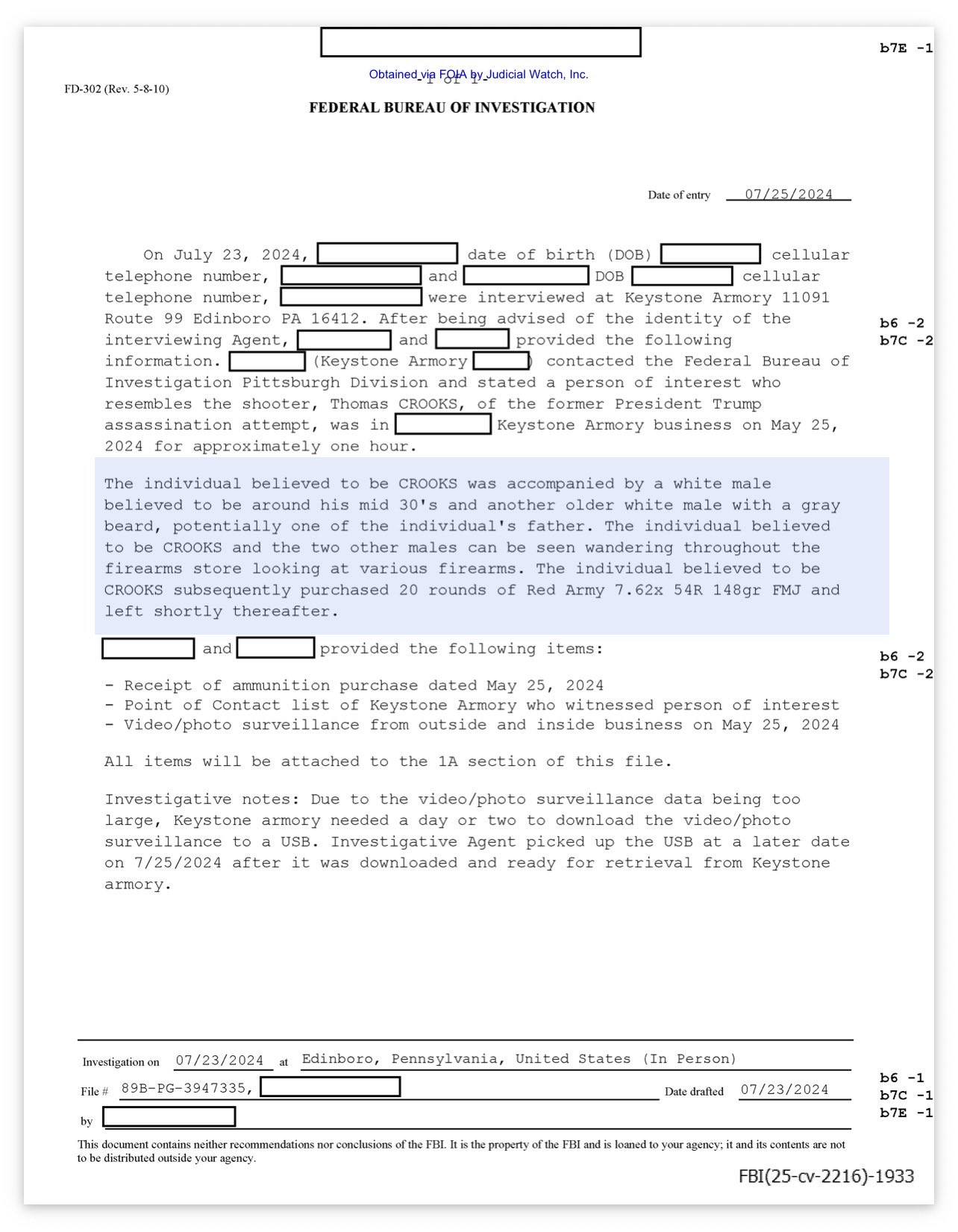
The report documents an FBI interview conducted July 23, 2024, after staff at Keystone Armory in Edinboro, roughly ninety miles north of Bethel Park, contacted the Pittsburgh field office to say a person resembling Crooks had spent about an hour in their store on May 25, weeks before the rally. Store surveillance reportedly shows him accompanied by two other men, one described as a white male in his mid thirties, the other an older white male with a gray beard whom the agent's own notes speculate could have been a father, of Crooks or of the other man, it isn't specified. All three are described browsing firearms together before the person believed to be Crooks bought 20 rounds of Red Army 7.62x54R ammunition, a caliber that has nothing to do with the AR-15 style rifle he'd eventually use, and left. Neither man has been publicly identified, and the document itself hedges every identification with "believed to be." It doesn't establish a conspiracy. What it does establish is that the FBI's own paperwork has at least one recorded instance of Crooks in the company of two unnamed adults at a gun store a few weeks before July 13, a loose thread that the public record has never tied off.
What's left after all of that is a young man who researched both political figures he might have wanted to hurt, who bought a rangefinder and flew a drone and drove past the venue a week early, clearly building toward something specific and planned, but who apparently never wrote down or told anyone why.
The Security Failure Underneath It
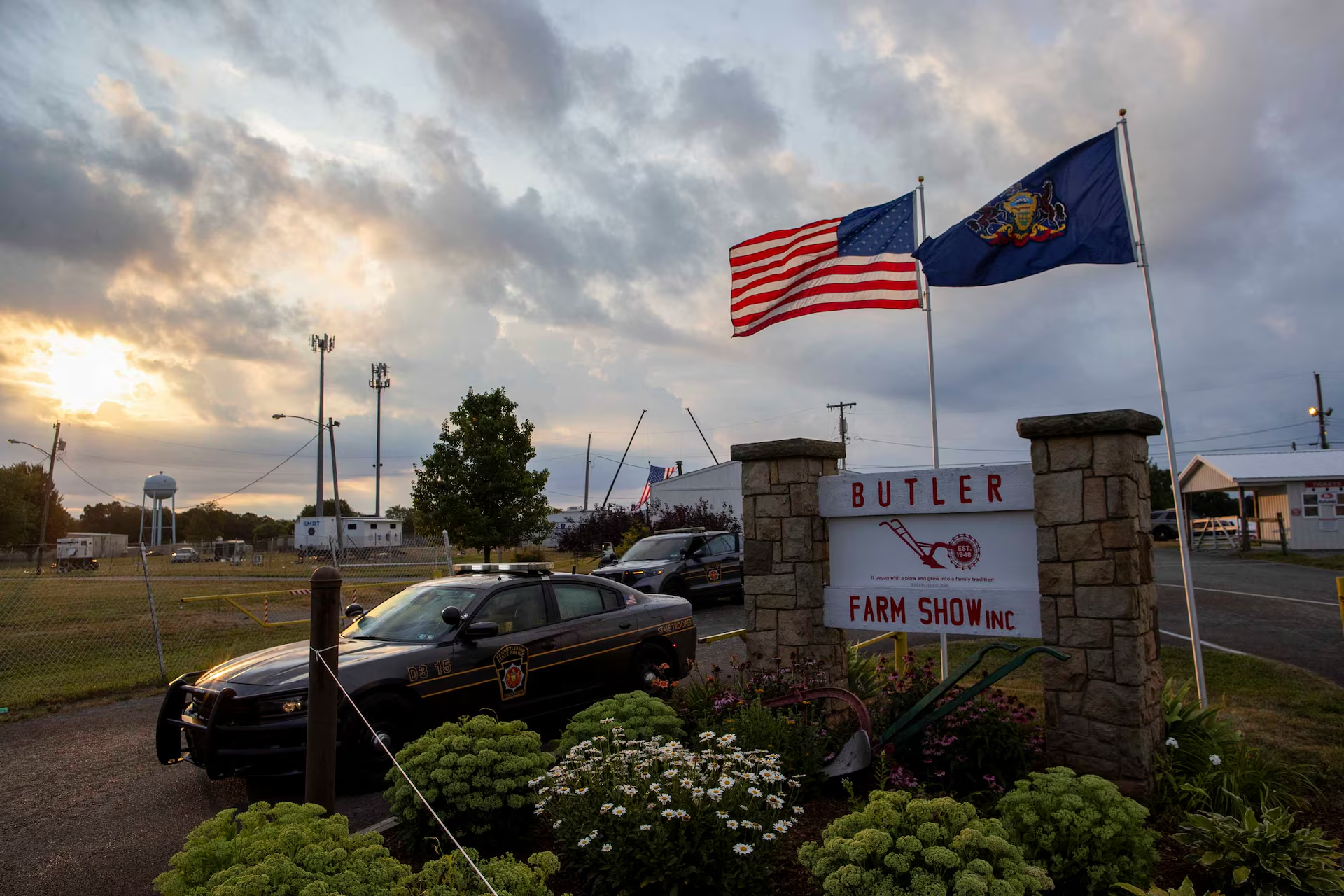
The entrance to the grounds itself, photographed not long after, state police cars still parked along the drive.
None of what Crooks did should have worked, and that's the part that has generated the most paper. The House Task Force on the Attempted Assassination of Donald J. Trump released its final report that December, a 180 page document unanimously approved by members of both parties, and it called the events in Butler preventable, while noting there wasn't one single decision or moment that let it happen. Instead it found inexperienced personnel spread thin by staffing shortages, real gaps in training across multiple roles on the ground, and no clear protocol for how local police and the Secret Service were supposed to actually talk to each other that day.
A DHS inspector general report released in mid-2026, nearly two years after the shooting, went further into the specifics of that communication breakdown. It found that local officers had already spotted Crooks on the roof two full minutes before he opened fire, and that warning never reached the agents protecting Trump. Investigators counted 102 radio transmissions from local law enforcement referencing the gunman that went completely unheard by the Secret Service, because no one had ever set up a joint communications channel between the two agencies for the event. Perhaps the single strangest detail in the whole report involves the agency's counter drone operator, who had received about twenty minutes of informal instruction before being assigned to the post that day. At the exact moment shots were being fired, that operator and a communications supervisor were still trying to figure out where the AGR building physically was, doing it by searching the location on Google rather than radioing someone who already knew.
Secret Service Director Kimberly Cheatle resigned that July, eleven days after the shooting, following a hearing before the House Oversight Committee where she repeatedly declined to answer basic questions about what had gone wrong. She had already told lawmakers directly that the agency failed in its mission that day, calling it the most serious operational failure in the Secret Service's modern history. The task force's final report carried 25 recommendations specific to what happened in Butler and 11 broader ones for the agency going forward, including a push to record all radio traffic during future events and to scale back the resources spent protecting visiting foreign dignitaries so more can go toward protecting the president and other top domestic officials.
What Doesn't Add Up, And Probably Won't
Every piece of this case that involves logistics is now unusually well documented. The range visits, the drone flight, the rangefinder, the roof access, the rifle his father bought him, the exact second the counter sniper fired back. Government reports on security failures are rarely this detailed about their own agency's mistakes, and the task force and inspector general deserve some credit for that level of candor.
What never arrived, and at this point probably never will, is an answer to the obvious question sitting underneath all of it. Why did a twenty year old with no criminal record, no diagnosed mental illness, and no coherent political ideology spend a week building toward killing a former president, using a rifle his own father had legally purchased for him? The FBI's own language, valuable insight without a conclusive motive, is about as honest an answer as anyone has managed. It isn't satisfying, and it was never going to be. Corey Comperatore is still dead, having spent his last moment on earth covering his family. David Dutch and James Copenhaver still carry what happened to them. Trump still carries the scar. And the one person who could have explained any of it made sure, deliberately or not, that he'd never have to.