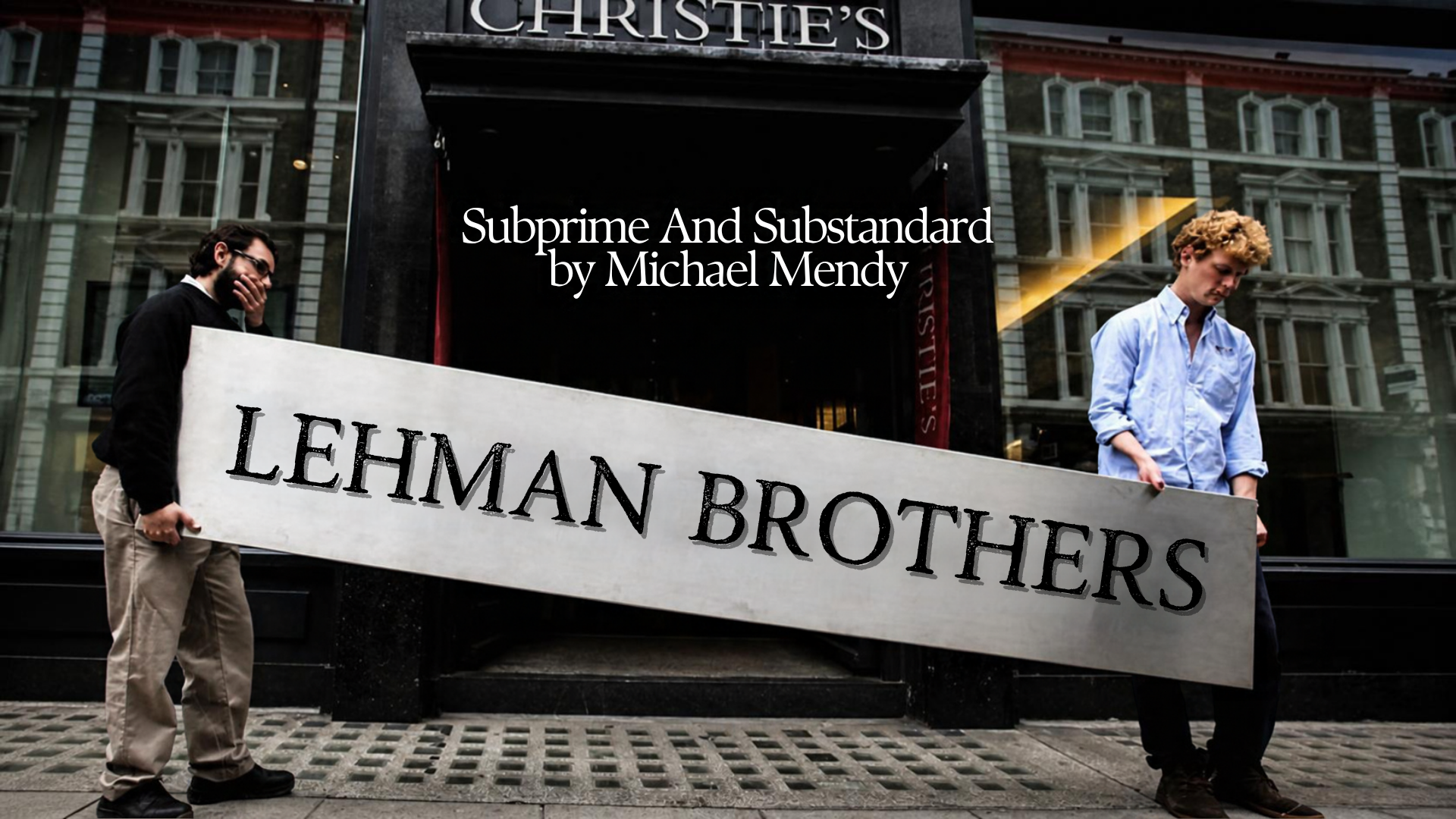
At 1:45 in the morning on Monday, September 15, 2008, lawyers for Lehman Brothers Holdings filed a Chapter 11 petition in the Southern District of New York. The firm listed $639 billion in assets and $613 billion in debt, which made it the largest bankruptcy in American history then and still does now. By sunrise, television crews were camped outside 745 Seventh Avenue filming employees walking out with their careers in cardboard boxes. Lehman had survived the Civil War, the Panic of 1907, the Great Depression, and the collapse of Long-Term Capital Management. It didn't survive a pile of home loans made to people who, by the lenders' own paperwork, were never likely to pay them back.
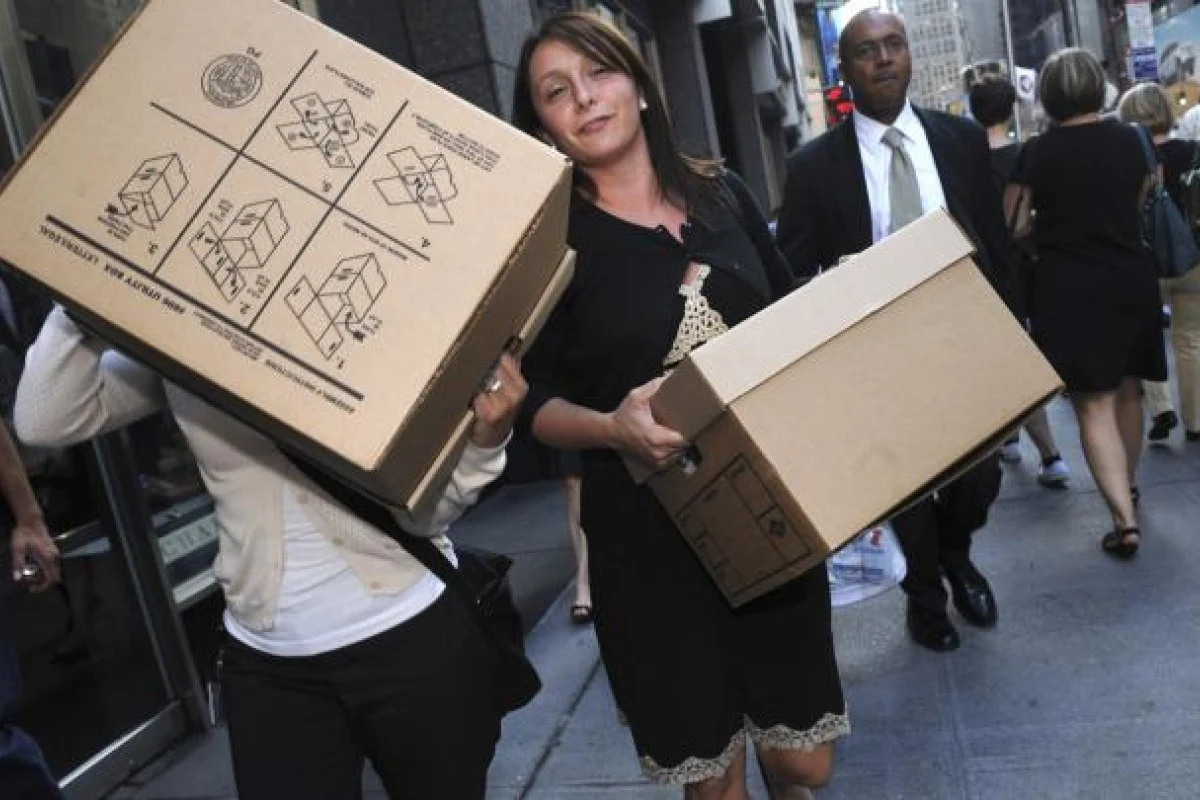
That was the scene on the sidewalks outside Lehman's offices in New York that Monday. The boxes became the defining image of the day, people who'd come to work at one of the oldest names on Wall Street carrying out whatever fit, with no idea whether they'd have a job, a paycheck, or anything left of the company stock many of them had been paid in.
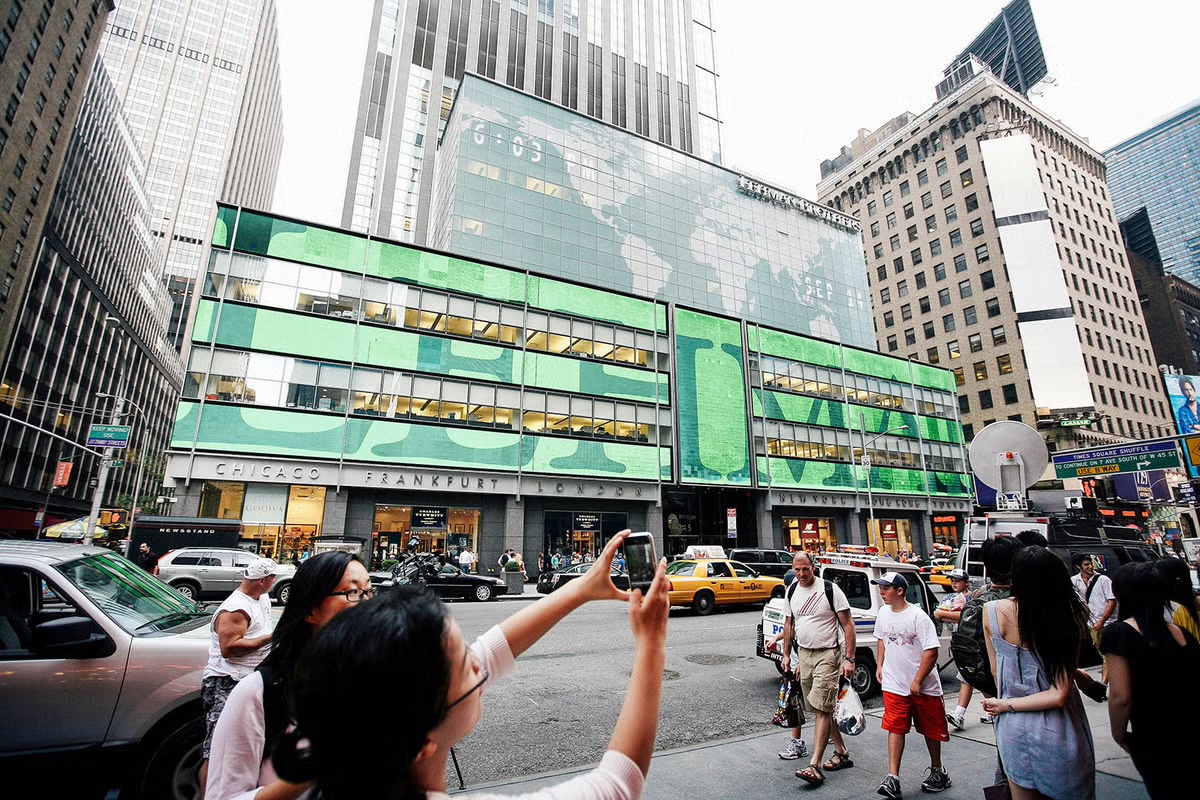
The building itself turned into a tourist stop. People on their way to Times Square stopped to take pictures of the screens, still cycling through the firm's name in bright green, while satellite trucks parked along the curb fed live shots to networks around the world.
The name the industry gave those loans was subprime. What this piece is really about is the second word in the title. The borrowers were subprime. Everything built on top of them was substandard: the underwriting, the ratings, the accounting, the risk management, and the regulation that was supposed to be watching all of it. What follows is drawn from the Financial Crisis Inquiry Commission's final report, the court-appointed examiner's report on Lehman, Federal Reserve and FDIC data, and the reporting done at the time, laid out as plainly as the record allows.
A Firm Older Than The Civil War
Lehman Brothers started as a dry goods store in Montgomery, Alabama. Henry Lehman, a Bavarian immigrant, opened it in 1844, and when his brothers Emanuel and Mayer joined him the business became Lehman Brothers in 1850. The family made its first real money brokering cotton, moved to New York, helped found the New York Cotton Exchange, and spent the next century turning into one of Wall Street's great underwriting houses.
The modern version of the firm was shaped by one man. Richard Fuld joined Lehman as a commercial paper trader in 1969, survived the firm's absorption into American Express in the 1980s, and became chief executive when Amex spun Lehman back out in 1994. Wall Street nicknamed him the Gorilla. Under Fuld, Lehman went from a wounded mid-tier bank to the fourth largest investment bank in the country, and a lot of that growth came from one business: turning American mortgages into bonds.

This was Lehman at the height of it, headquartered at 745 Seventh Avenue a block from Times Square, the building wrapped in stories of video screens running the firm's slogan, Where vision gets built, over a stone band carved with the cities it did business in. Photo by David Shankbone, CC BY 3.0.
Cheap Money
The story of the housing bubble usually starts with interest rates, and that's a fair place to start. After the dot-com crash and September 11, the Federal Reserve cut its benchmark rate eleven times in 2001 alone. By June 2003 the federal funds rate was 1%, the lowest in almost half a century, and it stayed there for a full year.
VIEW DATA
| Jan 2000 | 5.45% |
| Jan 2001 | 5.98% |
| Jan 2002 | 1.73% |
| Jan 2003 | 1.24% |
| Jan 2004 | 1.00% |
| Jan 2005 | 2.28% |
| Jan 2006 | 4.29% |
| Jan 2007 | 5.25% |
| Jan 2008 | 3.94% |
| Jan 2009 | 0.15% |
| Jan 2010 | 0.11% |
| Jan 2011 | 0.17% |
| Jan 2012 | 0.08% |
Cheap money does two things to a housing market. It makes monthly payments look affordable to people who couldn't otherwise buy, and it sends investors hunting for anything that pays more than a Treasury bond. Both forces pointed at the same place. Buyers wanted mortgages, and investors around the world wanted bonds backed by those mortgages, because they paid a little more than government debt and carried a triple-A rating that said they were just as safe.
The Fed started raising rates in mid-2004 and kept going until it hit 5.25% in June 2006. By then the market it had helped inflate was already at its peak.
The Loan Nobody Should Have Written
A subprime mortgage is a loan to a borrower with weak credit, usually a low credit score, a history of missed payments, or not enough income to comfortably carry the debt. Lending to those borrowers isn't wrong on its own. What changed in the 2000s is how much of it there was and how little anyone checked.
VIEW DATA
| 2001 | $190B · 8.6% |
| 2002 | $231B · 7.4% |
| 2003 | $335B · 8.3% |
| 2004 | $540B · 18.5% |
| 2005 | $625B · 20% |
| 2006 | $600B · 20.1% |
In 2001, lenders wrote about $190 billion in subprime mortgages. By 2005 it was $625 billion, and subprime had gone from under a tenth of the market to a fifth of it. When the Commission added in Alt-A loans (borrowers with decent credit but little documentation) and home equity lines, those riskier products reached $1.4 trillion and 48% of all new mortgages in 2006.
The products themselves got stranger as volume grew. The signature subprime loan was the 2/28 adjustable-rate mortgage, a low teaser rate for two years followed by a reset that could raise the monthly payment by hundreds of dollars. The unspoken assumption was that the borrower would refinance before the reset, which only works if home prices keep going up. Then came stated-income loans, where the borrower simply wrote down what they earned and nobody verified it. The industry called them liar loans, internally, while it was making them. At the far end were the NINJA loans: no income, no job, no assets.
The reason anyone would lend money this way comes down to a business model called originate to distribute. The mortgage broker who signed the borrower got paid at closing. The lender who funded the loan sold it within weeks to a Wall Street firm. The Wall Street firm pooled thousands of those loans into a bond and sold the bond to a pension fund in Ohio or a bank in Düsseldorf. At every step, the person making the decision was getting paid on volume and handing the risk to somebody else.
VIEW DATA
| Q1 2000 | $4.51T |
| Q1 2001 | $4.92T |
| Q1 2002 | $5.48T |
| Q1 2003 | $6.19T |
| Q1 2004 | $7.08T |
| Q1 2005 | $8.06T |
| Q1 2006 | $9.20T |
| Q1 2007 | $10.08T |
| Q1 2008 | $10.65T |
| Q1 2009 | $10.55T |
| Q1 2010 | $10.28T |
| Q1 2011 | $9.93T |
| Q1 2012 | $9.70T |
Add it all up and American households more than doubled their mortgage debt in eight years, from $4.5 trillion at the start of 2000 to a peak of $10.65 trillion in early 2008. Incomes came nowhere close to doubling over the same stretch. The difference was covered by rising home values, cash-out refinancing, and the assumption that both would keep going.
The Machine Behind The Mortgage
Lehman wasn't just buying these loans. It was making them. The firm owned its own subprime lender, BNC Mortgage, and its own Alt-A lender, Aurora Loan Services, which meant it could originate a mortgage in California, package it in New York, and sell it anywhere in the world without the loan ever leaving the Lehman family. For several years running it was one of the largest underwriters of mortgage-backed securities on Wall Street.
The bonds were built in slices called tranches. The top slice got paid first and took losses last, so it earned a triple-A rating. Lower slices paid more interest and took losses sooner. When the lower slices proved hard to sell, banks bundled them into a second layer of securities called collateralized debt obligations, sliced those again, and got much of the new top slice rated triple-A too.
The ratings agencies were paid by the banks whose bonds they rated. The Commission's numbers on how that worked out are hard to forget. In 2006 alone, Moody's put its triple-A rating on 30 mortgage-related securities every working day, and 83% of the mortgage securities it rated triple-A that year were eventually downgraded.
On top of all that sat credit default swaps, which were insurance contracts on bonds that weren't regulated as insurance. AIG's Financial Products unit sold hundreds of billions of dollars of that protection on mortgage securities without setting aside anything close to what it would need if the bonds went bad at the same time. Everyone's model assumed they wouldn't, because national home prices hadn't fallen in a meaningful way since the Depression.
VIEW DATA
| Jan 2000 | 100.0 |
| Jan 2001 | 109.2 |
| Jan 2002 | 116.4 |
| Jan 2003 | 127.7 |
| Jan 2004 | 140.7 |
| Jan 2005 | 160.1 |
| Jan 2006 | 180.8 |
| Jan 2007 | 182.7 |
| Jan 2008 | 171.1 |
| Jan 2009 | 149.4 |
| Jan 2010 | 145.0 |
| Jan 2011 | 139.0 |
| Jan 2012 | 134.2 |
| Oct 2012 | 144.0 |
Then they did. The Case-Shiller national index rose 85% between January 2000 and its peak in July 2006. From there it fell 27% to a bottom in February 2012. Once prices stopped rising, a borrower with a resetting 2/28 couldn't refinance and couldn't sell for enough to pay off the loan. The whole structure depended on something that was no longer happening.
VIEW DATA
| Jan 2000 | 1,636 |
| Jul 2000 | 1,463 |
| Jan 2001 | 1,600 |
| Jul 2001 | 1,670 |
| Jan 2002 | 1,698 |
| Jul 2002 | 1,655 |
| Jan 2003 | 1,853 |
| Jul 2003 | 1,897 |
| Jan 2004 | 1,911 |
| Jul 2004 | 2,002 |
| Jan 2005 | 2,144 |
| Jul 2005 | 2,054 |
| Jan 2006 | 2,273 |
| Jul 2006 | 1,737 |
| Jan 2007 | 1,409 |
| Jul 2007 | 1,354 |
| Jan 2008 | 1,084 |
| Jul 2008 | 923 |
| Jan 2009 | 490 |
| Jul 2009 | 594 |
| Jan 2010 | 614 |
| Jul 2010 | 546 |
| Jan 2011 | 630 |
| Jul 2011 | 623 |
| Jan 2012 | 723 |
| Jul 2012 | 740 |
Builders saw it first. Housing starts peaked at an annual rate of 2.27 million units in January 2006, before prices had even topped out, and then fell for three straight years to 478,000 in April 2009, a drop of 79%. Construction had been one of the biggest sources of new jobs during the boom, and those jobs went with it, long before anyone on Wall Street was carrying boxes.
Thirty Dollars On One
The part that turned a housing crash into a Wall Street collapse was leverage. Investment banks weren't funding their mortgage bets with their own money. They were borrowing, most of it overnight in the repo market, and posting the mortgage bonds themselves as collateral.
VIEW DATA
| Total assets (Nov 30, 2007) | $691.1B |
| Stockholders' equity | $22.5B |
| Gross leverage | 30.7x |
| Asset decline that erases equity | ≈3.3% |
At the end of its 2007 fiscal year, Lehman reported $691 billion in assets on $22.5 billion of shareholders' equity. That's a leverage ratio of 30.7 to 1, up from about 24 to 1 in 2004. At that ratio a 3.3% drop in the value of the firm's assets would wipe out all of its equity. Lehman didn't run a diversified book of safe government paper at that leverage. It held tens of billions of dollars in residential mortgages, commercial real estate, and leveraged loans, exactly the assets that were about to fall by a lot more than 3.3%.
Fuld didn't pull back when the market turned. He pushed further. In October 2007, months after the subprime market had visibly broken, Lehman and Tishman Speyer closed a roughly $22 billion buyout of Archstone-Smith, an apartment company, near the top of the commercial real estate market. Lehman's own risk limits were exceeded or raised to accommodate deals like it, which the bankruptcy examiner later documented in detail.
The firm also made its balance sheet look smaller than it was. Court-appointed examiner Anton Valukas found that Lehman used a transaction it called Repo 105 to temporarily move as much as $50 billion of assets off its books at the end of each quarter, then bring them back a few days after the numbers were reported. Lehman told investors it was lowering its leverage. The examiner concluded those statements were materially misleading, and that the firm's auditor, Ernst & Young, knew about Repo 105 and didn't challenge its non-disclosure.
The Cracks
The first failures came from the bottom of the chain. New Century Financial, the second largest subprime lender in the country, filed for bankruptcy on April 2, 2007. In June, two Bear Stearns hedge funds heavy in subprime CDOs collapsed. On August 9, the French bank BNP Paribas froze three of its funds and said it could no longer value their holdings because of what it called the complete evaporation of liquidity in certain market segments. The money markets seized up the same day. Two weeks later Lehman shut down BNC Mortgage.
VIEW DATA
| Q1 2000 | 1.95% |
| Q1 2001 | 2.34% |
| Q1 2002 | 2.24% |
| Q1 2003 | 1.98% |
| Q1 2004 | 1.64% |
| Q1 2005 | 1.42% |
| Q1 2006 | 1.61% |
| Q1 2007 | 2.08% |
| Q1 2008 | 3.68% |
| Q1 2009 | 7.99% |
| Q1 2010 | 11.48% |
| Q1 2011 | 10.37% |
| Q1 2012 | 10.33% |
Late payments rose every quarter. The delinquency rate on single-family mortgages held by American banks went from 1.4% at the end of 2004 to 11.5% by early 2010. In January 2008 Bank of America agreed to buy Countrywide, the largest mortgage lender in the country, for about $4 billion. In March, Bear Stearns, the smallest of the five big investment banks and the most exposed to mortgages, ran out of cash in a matter of days. Over a weekend, the Federal Reserve arranged a sale to JPMorgan Chase at $2 a share, later raised to $10, and agreed to take on $29 billion of Bear's worst assets through a new entity called Maiden Lane.
Everyone on Wall Street took the same lesson from the Bear rescue. The next firm in line was Lehman, and the government would probably step in if it came to that.
Lehman's Last Summer
VIEW DATA
| Feb 2007 | $86.00 |
| Dec 31, 2007 | $65.44 |
| Mar 17, 2008 | $31.75 |
| Jun 9, 2008 | $29.48 |
| Sep 8, 2008 | $14.15 |
| Sep 9, 2008 | $7.79 |
| Sep 12, 2008 | $3.65 |
| Sep 15, 2008 | $0.21 |
In May 2008 the hedge fund manager David Einhorn stood up at a New York investment conference and laid out why he thought Lehman was hiding losses on its real estate. The firm called his analysis misleading. On June 9, Lehman announced a $2.8 billion second-quarter loss, its first since going public. Three days later it removed its president, Joseph Gregory, and its chief financial officer, Erin Callan.
Through the summer, Fuld tried to find a buyer or an investor. The most serious talks were with the Korea Development Bank, and when those ended on September 9, Lehman's stock fell 45% in one day. On September 10 the firm announced an expected $3.9 billion third-quarter loss and a plan to spin its commercial real estate into a separate company. Nobody believed the numbers on the real estate. By Friday, September 12, the stock closed at $3.65. It had been above $80 in early 2007.
The Weekend
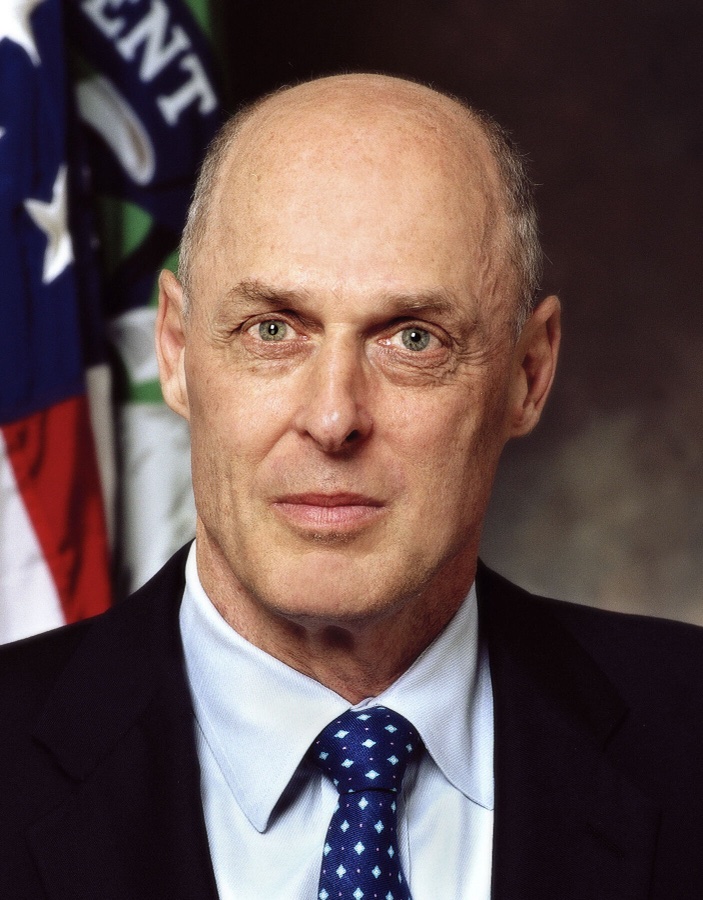
Henry Paulson, in his official Treasury portrait from 2006, the year he left the top job at Goldman Sachs to become Treasury Secretary. Two years later he was the man deciding which of his old competitors would survive.
That Friday evening, Treasury Secretary Henry Paulson and New York Fed President Timothy Geithner called the heads of the major Wall Street banks to the Federal Reserve Bank of New York and told them to come up with a private solution for Lehman. Paulson had already said publicly and privately that there would be no government money this time. Fannie Mae and Freddie Mac had been taken into federal conservatorship the Sunday before, and there was no political room left for another rescue.
Two buyers were at the table. Bank of America walked away on Saturday when it became clear there'd be no federal backstop, and bought Merrill Lynch instead for about $50 billion. Barclays got closer, but the British Financial Services Authority wouldn't waive a rule requiring a shareholder vote before Barclays could guarantee Lehman's trading obligations, and without that guarantee Lehman couldn't open on Monday. By Sunday afternoon, regulators told Lehman's board to file. It did, a few hours after midnight.
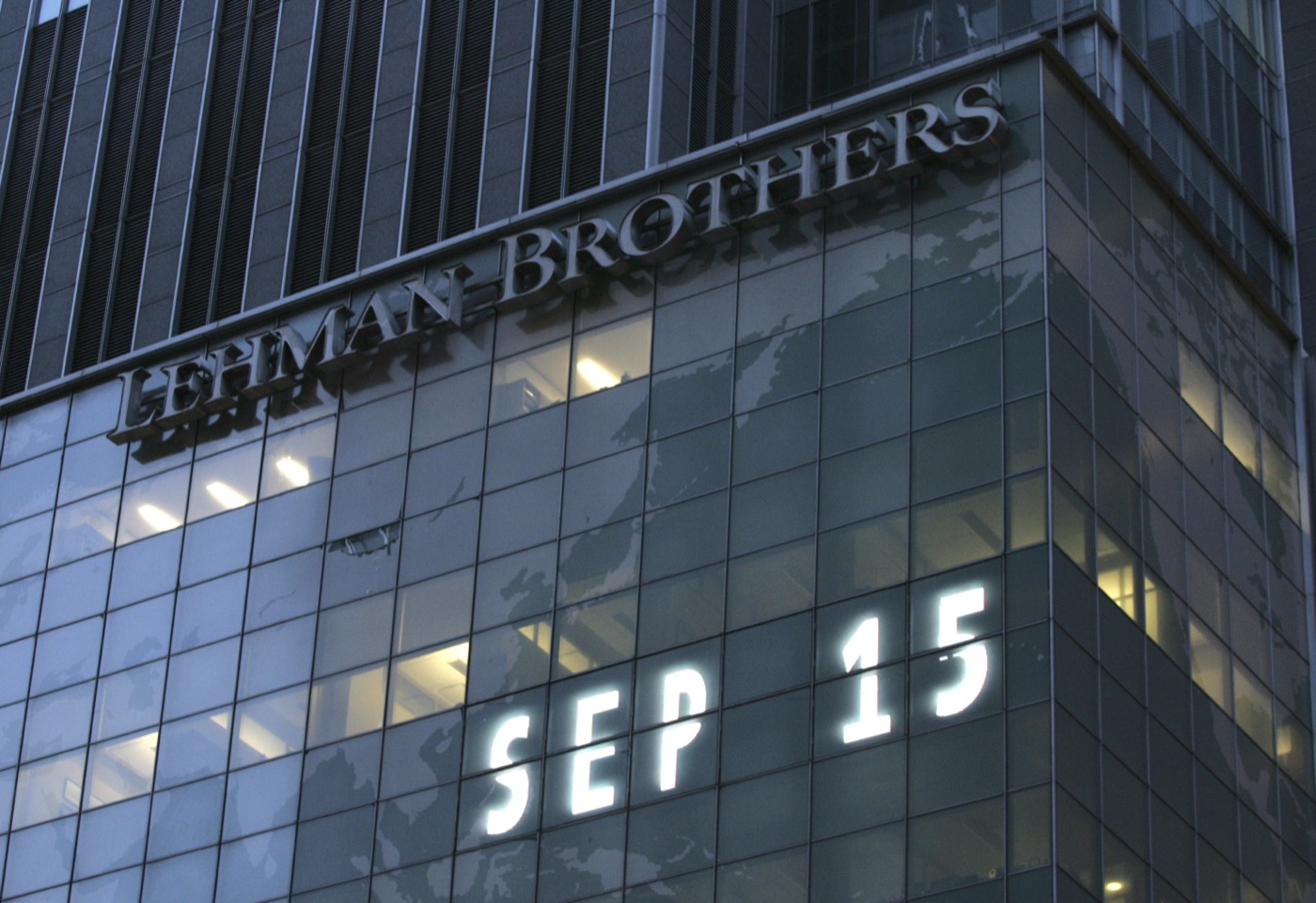
The building's own date display said it plainly by that evening. The name was still up in steel letters, a few office lights still on behind the glass, and the ticker underneath reading the day the firm stopped existing as anything but a bankruptcy estate.
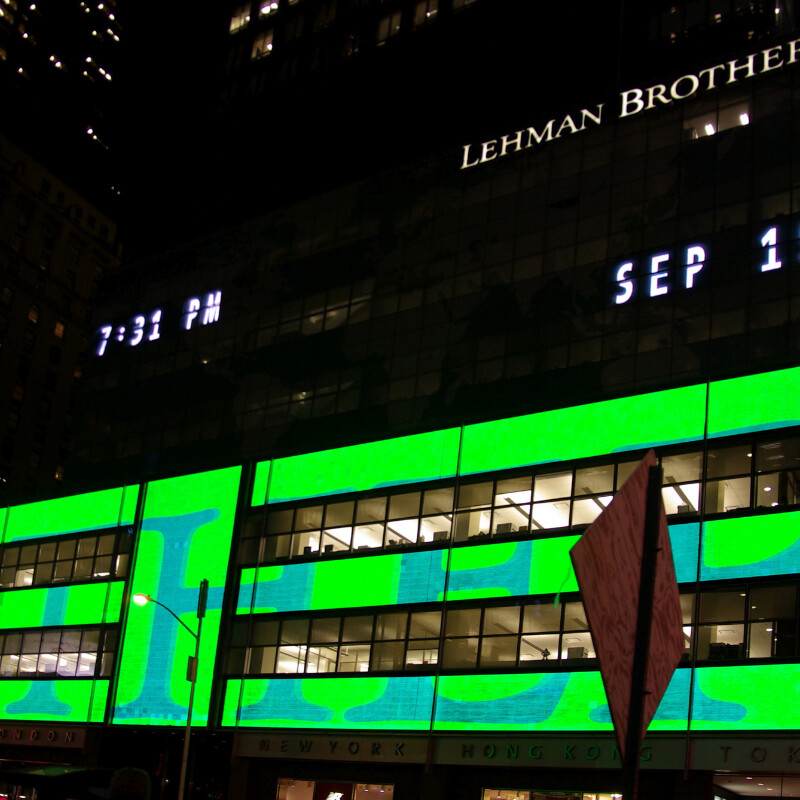
Later that night, the screens were still running. At 7:31 PM on September 15 the building was lit up green from the sidewalk to the upper floors, the clock and the date still ticking along on the glass, as if nobody had told the facade what had happened inside it.

By the time the news reached the rest of the staff, the decision had already been made for them. Most learned the firm was bankrupt the same way everyone else did, from television and the morning papers, and came in only to clear out their desks.
On Monday the Dow fell 504 points. On Tuesday the Fed lent AIG $85 billion for a 79.9% stake, because AIG's credit default swaps made it too interconnected to let go. The same day, the Reserve Primary Fund, a money market fund holding $785 million of Lehman's short-term debt, said its shares were worth 97 cents instead of a dollar. That's called breaking the buck, and it set off a run on money market funds that froze the commercial paper market that ordinary companies use to make payroll.
VIEW DATA
| Jan 2, 2007 | 0.42 |
| Feb 1, 2007 | 0.36 |
| Mar 5, 2007 | 0.36 |
| Apr 3, 2007 | 0.44 |
| May 4, 2007 | 0.60 |
| Jun 6, 2007 | 0.69 |
| Jul 6, 2007 | 0.55 |
| Aug 6, 2007 | 0.62 |
| Sep 6, 2007 | 1.54 |
| Oct 5, 2007 | 1.35 |
| Nov 6, 2007 | 1.24 |
| Dec 7, 2007 | 2.10 |
| Jan 10, 2008 | 1.22 |
| Feb 11, 2008 | 0.82 |
| Mar 12, 2008 | 1.40 |
| Apr 14, 2008 | 1.64 |
| May 14, 2008 | 0.93 |
| Jun 13, 2008 | 0.86 |
| Jul 15, 2008 | 1.42 |
| Aug 13, 2008 | 0.98 |
| Sep 15, 2008 | 1.79 |
| Oct 15, 2008 | 4.33 |
| Nov 14, 2008 | 2.10 |
| Dec 16, 2008 | 1.81 |
| Jan 20, 2009 | 0.99 |
| Feb 19, 2009 | 0.95 |
| Mar 20, 2009 | 1.01 |
| Apr 22, 2009 | 0.96 |
| May 22, 2009 | 0.48 |
| Jun 23, 2009 | 0.41 |
The cleanest way to see the panic is in what banks charged each other. The TED spread measures the gap between the rate banks paid to borrow from one another for three months and the rate the U.S. government paid over the same period. In normal times it sat under half a point. It jumped past two points the week BNP froze its funds in August 2007, eased, spiked again when Bear failed, and then after Lehman went nearly vertical, reaching 4.58 points on October 10, 2008. At that level banks simply weren't lending to each other, because none of them could tell which of the others was holding the next Lehman.
Merrill Lynch, Sold In A Weekend
The other firm on the chopping block that weekend was the one with the bull. Charles Merrill founded Merrill Lynch in 1914 and built it around the idea that ordinary Americans should own stocks, sending an army of brokers into small towns across the country. Wall Street called them the Thundering Herd. By 2008 it had the largest retail brokerage force in the country, more than 16,000 financial advisers, and in the middle of the decade it had also become one of the largest underwriters of the mortgage CDOs at the center of this story.

Merrill's reckoning started a year before Lehman's. In October 2007 it announced a $7.9 billion write-down on mortgage securities and the largest quarterly loss in its history, and its chief executive, Stan O'Neal, was gone by the end of the month. His replacement, John Thain, came from running the New York Stock Exchange and spent his first months trying to shrink the pile of CDOs the firm couldn't sell.
VIEW DATA
| Face value of CDOs sold | $30.6B |
| Sale price | $6.7B (≈22¢ on the dollar) |
| Financed by Merrill (≈75%) | ≈$5.0B |
| Cash from Lone Star (≈25%) | ≈$1.7B |
The sale that was supposed to clean it up showed how bad things were. In July 2008 Merrill sold $30.6 billion of super-senior CDOs, the safest slices of the securities it had built and once rated triple-A, to the private equity firm Lone Star Funds for $6.7 billion, about 22 cents on the dollar. And Lone Star didn't even have to come up with most of that. Merrill lent it roughly three quarters of the purchase price, with the CDOs themselves as the only collateral. Analysts read it as a firm that had given up on ever getting its money back.
By the weekend of September 12, Thain could see what was about to happen to Lehman, and he knew Merrill was next. While the government was trying to find Lehman a buyer, Thain called Bank of America's chief executive, Ken Lewis, and by Sunday night they had a deal. Bank of America agreed to pay about $50 billion in stock, $29 a share, a 70% premium over Merrill's Friday close. The 94-year-old firm was sold in about 48 hours, and it's a fair bet it would otherwise have been the next bankruptcy in line.
The deal went bad almost immediately. Over the next three months Merrill lost billions more, and in December Lewis told Paulson and Bernanke he was considering walking away using the contract's material adverse change clause. Lewis later testified that Paulson warned him the government could remove Bank of America's management and board if he backed out. He stayed in. The deal closed on January 1, 2009, and two weeks later Bank of America revealed that Merrill had lost $15.3 billion in the fourth quarter alone. The government put another $20 billion of TARP money into Bank of America and guaranteed $118 billion of its assets against losses, mostly to absorb Merrill.
Then came the bonuses. Merrill had paid out about $3.6 billion in year-end bonuses in December, earlier than usual, before the deal closed and before anyone outside knew about the fourth-quarter loss. New York's attorney general went after the payments, the SEC sued over how they'd been disclosed to shareholders, and Bank of America eventually paid $150 million to settle. Thain was forced out on January 22, 2009, a story that got worse when it came out that he'd spent $1.2 million redecorating his office the year the firm nearly collapsed. Today Merrill survives only as the name of Bank of America's wealth management business, the bull still on the sign.
Why Not Save It
Whether Lehman should have been rescued is still argued about. Paulson and Fed Chairman Ben Bernanke said afterward that they didn't have the legal authority to do it, because the Fed can only lend against adequate collateral and Lehman's assets weren't worth enough to secure the kind of loan it needed. Critics, most notably the economist Laurence Ball in a 2018 book on the decision, argued the Fed did have enough collateral and that the choice was as much political as legal.
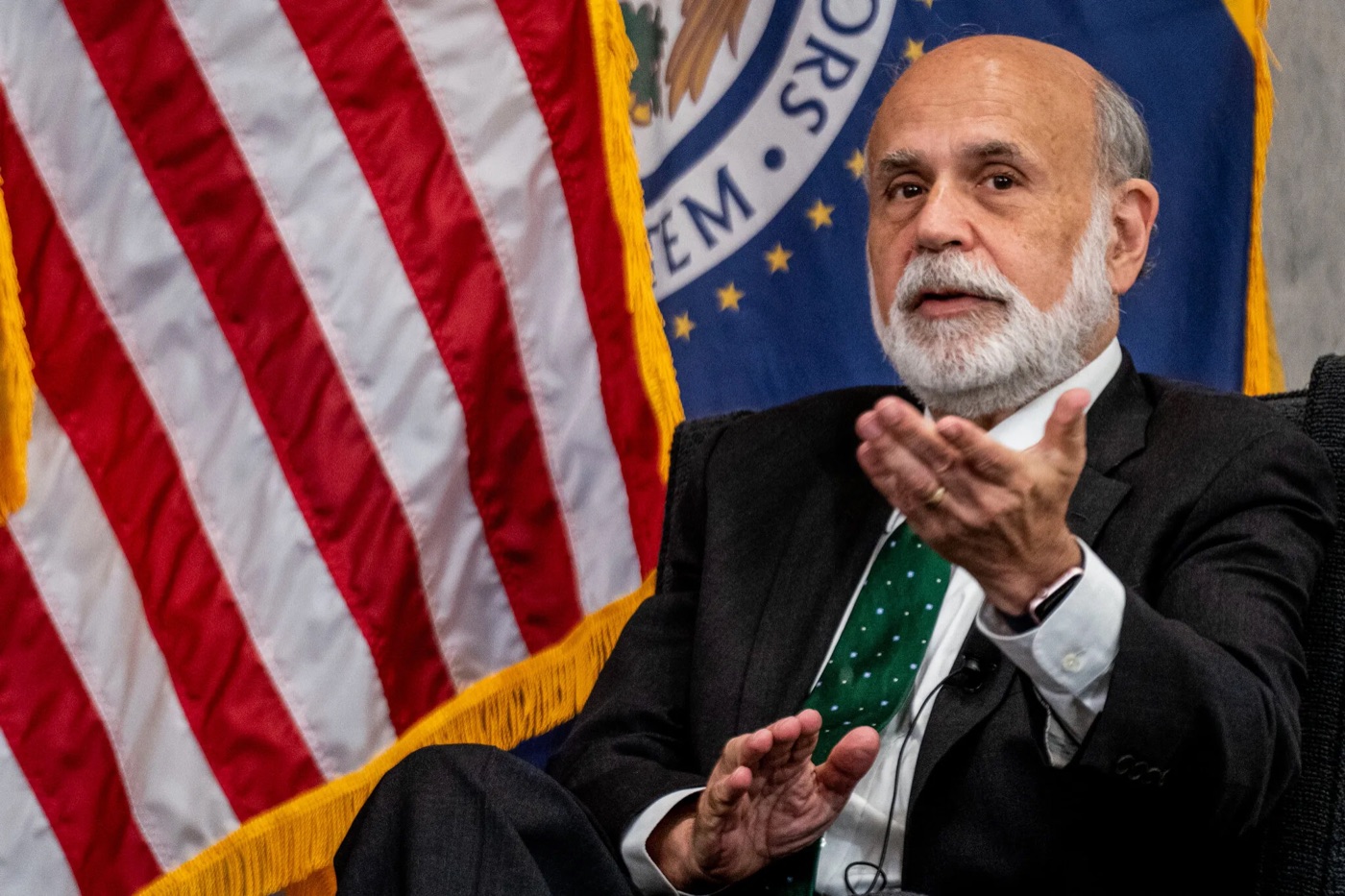
Bernanke, pictured years later in front of the Federal Reserve's flag, spent much of the rest of his career defending the Lehman decision. A scholar of the Great Depression who had written about how the Fed's failure to act made the 1930s worse, he ended up chairing the Fed through the closest thing to a repeat, and later won a share of the 2022 Nobel Prize in economics for that earlier research on banks and financial crises.
What isn't in dispute is what happened next. Within two weeks, the two remaining independent investment banks, Goldman Sachs and Morgan Stanley, had converted into bank holding companies to get permanent access to the Fed. Washington Mutual became the largest bank failure in American history. On September 29, the House voted down the first version of the bailout bill 228 to 205, and the Dow dropped 777.68 points, its largest one-day point decline up to then. Four days later a revised bill passed, and President Bush signed the $700 billion Troubled Asset Relief Program into law.
VIEW DATA
| Week of Jan 3, 2007 | $0.88T |
| Week of Apr 4, 2007 | $0.86T |
| Week of Jul 4, 2007 | $0.88T |
| Week of Oct 3, 2007 | $0.87T |
| Week of Jan 2, 2008 | $0.92T |
| Week of Apr 2, 2008 | $0.88T |
| Week of Jul 2, 2008 | $0.90T |
| Week of Oct 1, 2008 | $1.50T |
| Week of Dec 31, 2008 | $2.24T |
| Week of Apr 1, 2009 | $2.08T |
| Week of Jul 1, 2009 | $2.01T |
| Week of Sep 30, 2009 | $2.14T |
| Week of Dec 30, 2009 | $2.23T |
| Week of Mar 31, 2010 | $2.31T |
| Week of Jun 30, 2010 | $2.33T |
| Week of Sep 29, 2010 | $2.30T |
| Week of Dec 29, 2010 | $2.42T |
The Fed, having let Lehman go, spent the rest of the year doing almost everything else. It opened emergency lending programs for money market funds, commercial paper, and foreign central banks, and its balance sheet showed it. The week before Lehman failed, the Federal Reserve held about $926 billion in assets. By mid-December it held $2.26 trillion, more than doubling in three months, and it never went back to where it started.
Barclays ended up buying Lehman's North American business out of bankruptcy for about $1.75 billion including the headquarters building. Nomura took most of the operations in Asia and Europe. The rest took more than a decade to unwind.
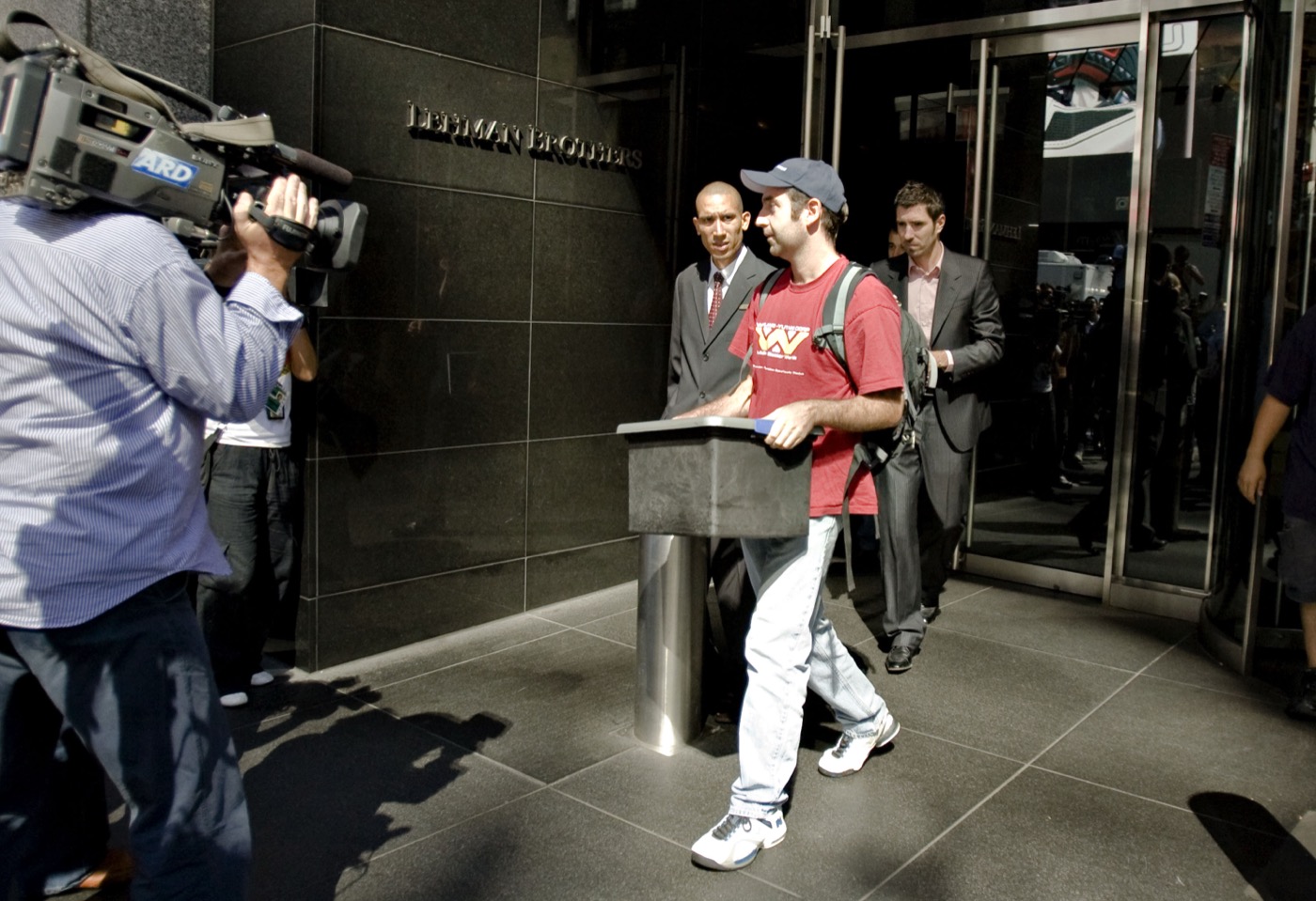
Out front of 745 Seventh Avenue, the Lehman Brothers name was still bolted to the granite while people walked past it carrying their desks in plastic bins. The camera crews came from everywhere. The one in this frame is from ARD, German public television, which says something about how quickly the story stopped being an American one.
The same thing was happening an ocean away. At Lehman's European headquarters in Canary Wharf, roughly 5,000 staff showed up to find the London arm in administration and news crews waiting on the plaza outside. Because the parent company had swept cash back to New York before the filing, the London office woke up without enough money to make payroll.
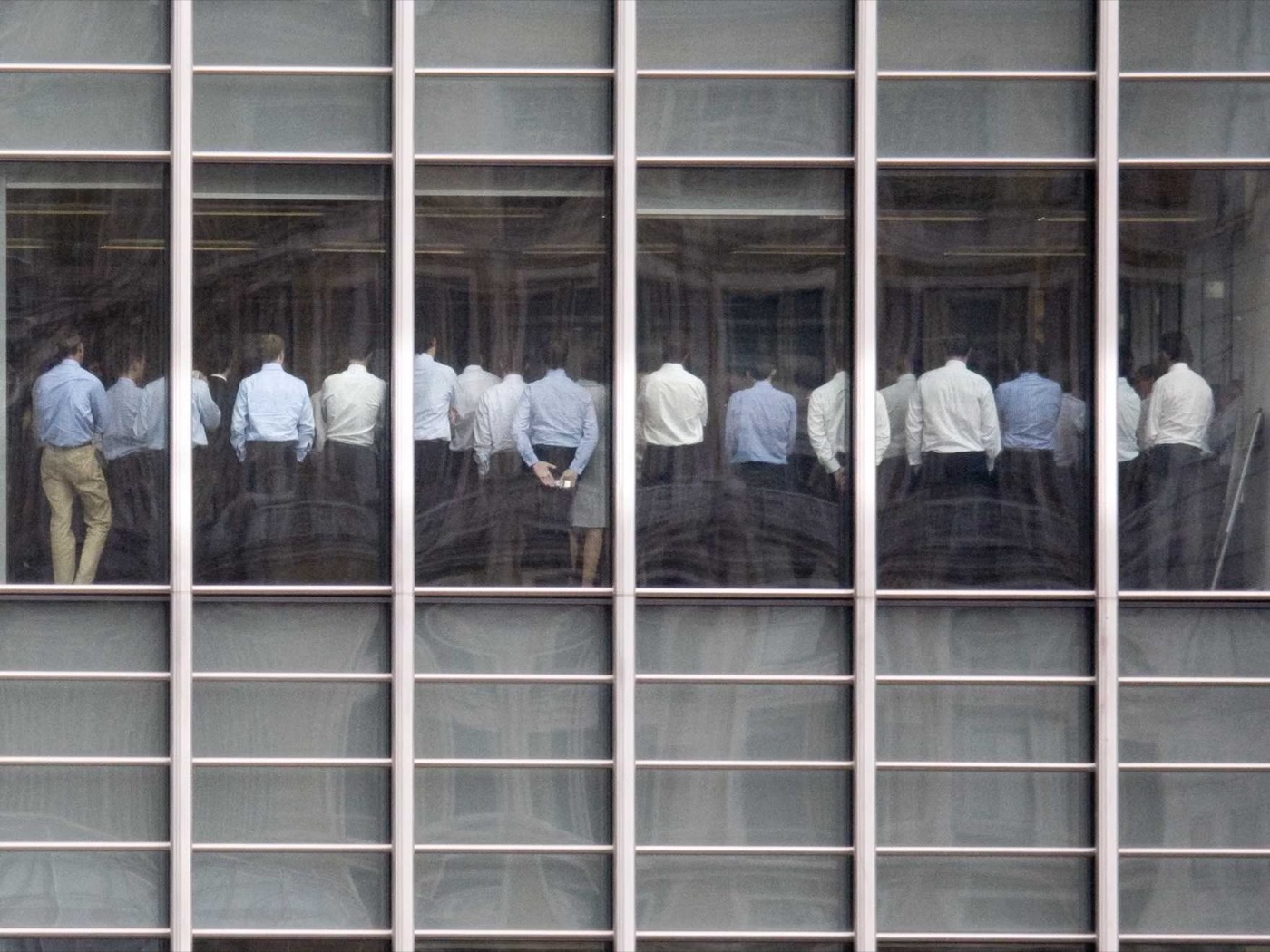
Inside, most people spent that week the same way, standing around in shirtsleeves in groups waiting to hear something from someone. Photographers across the way caught rows of them through the glass, backs to the windows, a trading floor with nothing left to trade.

For anyone walking out that day, there was no quiet way to leave. Photographers packed the plaza from the morning on, and anyone carrying a box got a ring of cameras pointed at them, so ordinary back office and trading staff ended up as front page images of a collapse they'd had no part in deciding.

The boxes in London mostly came from Iron Mountain, the records storage company, which is why the same blue logo shows up in photo after photo from that week. Nomura bought the European and Middle Eastern equities and investment banking business and kept many of those employees on. For everyone else, the box was the severance package.
The FBI Opens A File
On September 23, 2008, eight days after the bankruptcy, law enforcement officials confirmed to the Associated Press that the FBI was investigating Lehman Brothers, Fannie Mae, Freddie Mac, and AIG for possible fraud. The four were part of a broader sweep. Over the previous year the bureau's corporate fraud caseload tied to the mortgage business had grown from 14 firms to 26, and the questions were the ones you'd expect after a collapse this fast: whether executives had misrepresented what their assets were worth, whether anyone had traded on inside information, and whether the companies had hidden how much their mortgage securities had lost. FBI Director Robert Mueller had told reporters the week before that agents were looking at whether any of the firms had misrepresented their assets.

For Lehman, the inquiry grew quickly. Federal prosecutors in Manhattan, Brooklyn, and Newark all opened investigations, and by October grand juries had subpoenaed at least a dozen people, Fuld among them. Prosecutors wanted to know whether Lehman had told investors the truth that summer, when it was raising billions in new capital and assuring the market its real estate was properly valued and its liquidity was strong. The Valukas report on Repo 105 came out in March 2010 and looked, to a lot of people, like a roadmap for a case.
The FBI had seen at least part of this coming. In 2004, an FBI assistant director told Congress that mortgage fraud had the potential to be an epidemic. But in the years after September 11 the bureau had moved well over a thousand agents from criminal investigations to counterterrorism, and the white-collar squads that had handled the savings and loan crisis in the early 1990s were a fraction of their former size. The mortgage fraud cases the FBI did bring mostly went after the bottom of the chain. In June 2008, three months before Lehman failed, the Justice Department announced Operation Malicious Mortgage, a sweep that charged more than 400 people, most of them brokers, appraisers, and borrowers who had lied on individual loan applications. The firms that bought, packaged, and sold those loans by the hundred thousand were a harder case to make.
None of the four ever produced a criminal case against a senior executive. The SEC's staff closed its Lehman inquiry without recommending charges, and the criminal investigations went quiet the same way. Prosecutors ran into the problem that defined nearly every crisis-era case: proving that an executive knowingly lied, rather than believed their own bad numbers, and doing it about accounting that an outside auditor had signed off on. Lehman had structured Repo 105 through London on the strength of a British law firm's opinion letter, after failing to get one from an American firm, so the transactions themselves were hard to call a crime. What investors were never told about them was the problem, and nobody was ever charged over that either.
Main Street Gets The Bill
VIEW DATA
| Jan 2000 | 4.0% |
| Jan 2001 | 4.2% |
| Jan 2002 | 5.7% |
| Jan 2003 | 5.8% |
| Jan 2004 | 5.7% |
| Jan 2005 | 5.3% |
| Jan 2006 | 4.7% |
| Jan 2007 | 4.6% |
| Jan 2008 | 5.0% |
| Jan 2009 | 7.8% |
| Jan 2010 | 9.8% |
| Jan 2011 | 9.1% |
| Jan 2012 | 8.3% |
The recession officially started in December 2007 and ended in June 2009, but that didn't mean much to people living through it. Unemployment peaked at 10.0% in October 2009. Payroll employment fell by about 8.7 million jobs from early 2008 to early 2010. Millions of families went through foreclosure, and many of the neighborhoods where subprime lending had been most concentrated took the better part of a decade to get back to where they started.
VIEW DATA
| 2007 | 3 |
| 2008 | 25 |
| 2009 | 140 |
| 2010 | 157 |
| 2011 | 92 |
| 2012 | 51 |
| 2013 | 24 |
The banking system didn't get off easy either. No FDIC-insured bank failed in 2005 or 2006. Between 2008 and 2013, 489 did, most of them small community banks that had loaded up on real estate loans in their own towns.
Substandard
The Financial Crisis Inquiry Commission's majority opened its conclusions with a sentence meant to cut off the most common excuse: the crisis was avoidable. It found widespread failures in financial regulation, dramatic breakdowns in corporate governance and risk management at systemically important firms, excessive borrowing and risk, a systemic breakdown in accountability and ethics, and a collapse in mortgage lending standards. It said the ratings agencies were essential cogs in the wheel of financial destruction. The Commission's Republican members dissented, and put more of the weight on global capital flows and on federal housing policy, which is also worth reading.
Accountability was thin either way. Valukas found colorable claims against Fuld and three of Lehman's chief financial officers over the misleading balance sheet, and against Ernst & Young over the audit. The SEC declined to bring a case against any Lehman executive. Ernst & Young settled a lawsuit from New York's attorney general over Repo 105 for $10 million in 2015. Fuld told Congress in October 2008 that he had made about $310 million from 2000 to 2007. The committee's own figure was closer to half a billion. Across the whole crisis, only one Wall Street banker went to prison for conduct tied to mortgage securities, Kareem Serageldin, a Credit Suisse trading executive who pleaded guilty to inflating the value of mortgage bonds.
Congress passed the Dodd-Frank Act in 2010, which created the Consumer Financial Protection Bureau, required lenders to verify a borrower's ability to repay, forced most derivatives through clearinghouses, and set higher capital requirements for large banks. Parts of it have been rolled back since. Mortgage underwriting is far stricter than it was in 2006, and the kind of leverage Lehman ran at would not be allowed at a big bank today.
That's the lesson worth keeping. Subprime borrowers didn't bring down the global financial system. There were never enough of them to do that on their own. It took a chain of institutions, every one of which lowered its standards because someone else was supposed to be holding the risk. The broker trusted the lender, the lender trusted the bank, the bank trusted the ratings, the investors trusted the triple-A, and the regulators trusted the banks to manage themselves. When home prices finally turned, each link found out at the same time that the one before it had been substandard all along. Lehman just happened to be holding the most of it, and borrowing the most to do it, when the music stopped.
Sources: Financial Crisis Inquiry Commission, The Financial Crisis Inquiry Report (January 2011). Report of Anton R. Valukas, Examiner, In re Lehman Brothers Holdings Inc. (March 2010). Lehman Brothers Holdings Inc., Form 10-K for fiscal 2007. Federal Reserve Bank of St. Louis FRED series CSUSHPINSA, FEDFUNDS, DRSFRMACBS, UNRATE, and household net worth from the Financial Accounts of the United States. Inside Mortgage Finance, 2007 Mortgage Market Statistical Annual. FDIC, Crisis and Response: An FDIC History, 2008–2013. Federal Reserve History, Support for Specific Institutions. Laurence Ball, The Fed and Lehman Brothers (2018). Contemporaneous reporting from CNNMoney, NPR, and CNBC.